
Public
Accredited · Northwest Commission on Colleges and Universities
Juneau, Alaska
62.5% Acceptance Rate
A complete at-a-glance picture of every metric that matters for your 2026 application
University of Alaska Southeast, established in 1972, specializes in marine biology, environmental science, and Indigenous studies against the backdrop of Alaska's wilderness.
The campus in Juneau features the Egan Library with Alaska Native art collections, marine research vessels, and outdoor leadership programs that utilize the surrounding Tongass National Forest as a living laboratory.
University of Alaska Southeast is moderately selective. 62.5% of applicants are admitted, with room for a well-rounded, if imperfect, transcript.

Source: IPEDS & College Scorecard (Nov 2025).
The application deadline for University of Alaska Southeast is December 1 for Regular (term-based) applicants, with additional plans listed below.
Deadlines are verified from official institutional sources but may change each cycle. Always confirm final dates on the official website.
Real-Time Sensitive Analysis — based on University of Alaska Southeast's verified institutional data
Adjust the sliders to see how every decimal point affects your outcome.
⚠️ Note: Predicting based on regional averages as this institution does not publicly report full score datasets.
Calculated via College Portal's Human-Intelligence (HI) Methodology & Editorial Standards. Verified by Sohaib Ahmad Khan.
Standardized scores still matter here: aim for the middle 50% range of the 2026 admitted class below, and if University of Alaska Southeast is test-optional, a high score submitted voluntarily still helps with merit scholarships.
University of Alaska Southeast takes a broad view of applicants. Your energy is best spent proving readiness for coursework and maximizing your financial aid package.
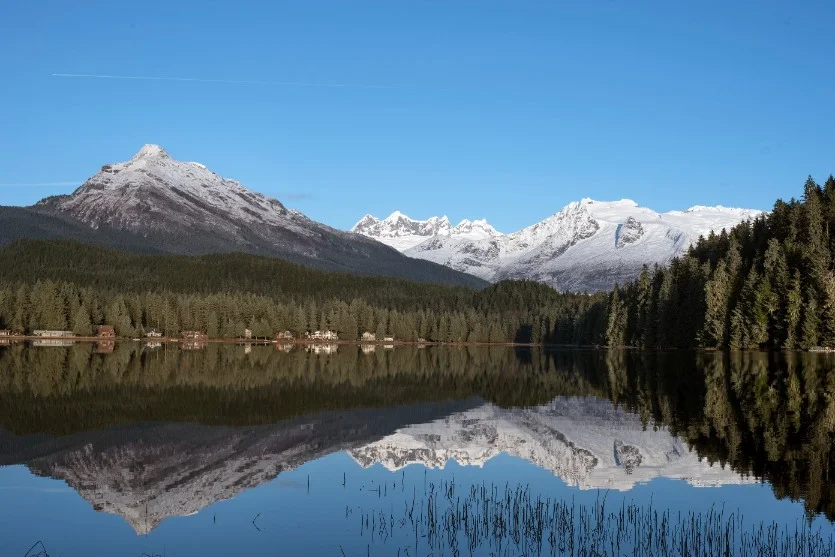
UAS sits on the shore of Auke Lake in Juneau, with the Mendenhall Glacier, Tongass National Forest, and the Inside Passage all within close range of the classroom. Marine biology students track humpback whale migrations and map kelp canopy from field stations accessible by kayak. Outdoor Studies capstone expeditions have crossed the Juneau Icefield, summited peaks in the Wrangell-St. Elias range, and traveled to Patagonia and the Japanese backcountry. The Alaska Coastal Rainforest Center coordinates research on one of the world's few intact coastal temperate rainforests. Applications should demonstrate that a student has researched which specific program at UAS leverages this environment - not just that they want to live near mountains and glaciers, but that they understand how the curriculum is built around the specific ecosystems outside the classroom door.
Juneau is Alaska's capital and one of the few U.S. state capitals with no road connection to the rest of the state's highway system. The city is accessible only by plane or the Alaska Marine Highway ferry system. This means that getting on and off campus for holidays, medical appointments, or family emergencies requires advance planning and real cost - it is not a drive away from anything. Students who thrive at UAS typically lean into this geographic isolation as part of the experience; students who struggle often underestimated how genuinely remote Juneau feels, especially during the long, dark, wet winters that are characteristic of a Southeast Alaska rainforest climate.
UAS is a federally designated Alaska Native and Native Hawaiian-serving Institution (ANNHI). The Sitka campus offers the Northwest Coast Arts program, which provides a foundation in Northwest Coast artistic traditions and can lead into a Bachelor of Liberal Arts in Alaska Native Language and Studies or a Bachelor of Arts in Indigenous Studies. The Juneau campus hosts Alaska Native language programs and research through the humanities department. Students with Indigenous heritage or genuine scholarly interest in Alaska Native cultures, languages, or environmental justice in Indigenous communities will find UAS's programs are professionally serious, not tokenistic - they are built in partnership with regional tribes and communities that have a direct stake in the research.
UAS serves all of Southeast Alaska through a structure where campus-based residential study (Juneau) and distance/online learning serve very different student populations. The full-time residential Juneau enrollment is only about 428 students; the much larger total enrollment of ~2,000 reflects the many part-time distance learners distributed across the region. Students applying as traditional first-year residential students are entering a genuinely small, tight-knit community on the Auke Lake campus. Students applying for online programs are entering a completely different institutional context. Applications and advising conversations should specify which modality and campus the student is targeting, since academic support, housing, and community look entirely different across these tracks.
UAS's six-year graduation rate of approximately 21?28% (figures vary by source and population measured) is significantly below national averages, and this is largely a function of the institution's mission-driven service to part-time, working, and place-bound students in remote Southeast Alaska communities - not primarily a quality-of-program signal. However, for traditional-age students applying as full-time residential students at the Juneau campus, this aggregate figure can be misleading in both directions: the residential cohort's persistence profile looks different from the full institutional average. Students should ask UAS directly about first-time full-time student six-year completion rates, since the aggregate figure includes the high part-time and non-degree-seeking student share that depresses the published number.
University of Alaska Southeast offers a rigorous academic environment, but 'worth it' is a personal calculation of cost, program fit, and outcomes. The figures below are a starting point.
The average household income among admitted students is $73,600, with a graduate unemployment rate of 5.22%.
The sticker price is $16,796/year, but the average net price students actually pay, after Pell and federal grants, is closer to $7,233.
14% of students receive a Pell Grant and 14% take federal loans at University of Alaska Southeast. File your FAFSA early and list University of Alaska Southeast as a choice to be considered for both.
Median earnings 10 years after enrollment (roughly 4–6 years post-graduation) are $48,475. That's about 19% above the U.S. median graduate income.
Median earnings for University of Alaska Southeast graduates sit around $48,475 a year.
At about $16,796 a year, University of Alaska Southeast is on the more affordable end.
University of Alaska Southeast's Pell Grant rate of 14.0% sits below the national average. Merit-based aid is worth checking regardless of income.
At 62.5%, University of Alaska Southeast's acceptance rate is on the more attainable end compared to top-tier selective schools.
The application deadline for University of Alaska Southeast is December 1 for Regular (term-based) applicants.
The application fee is 50. Fee waivers may be available. Check with admissions.
Yes, transfers are common. Have transcripts, recommendation letters, and a solid personal statement ready to make your case.
Strong academics, a focused extracurricular profile, and standout essays move the needle most, along with a competitive SAT/ACT score where relevant.