
Public
Accredited · Higher Learning Commission
Golden, Colorado
59.7% Acceptance Rate
A complete at-a-glance picture of every metric that matters for your 2026 application
Colorado School of Mines, established in 1874 during the state's silver boom, remains a global leader in earth resources and energy innovation. Home to the National Renewable Energy Laboratory partnership.
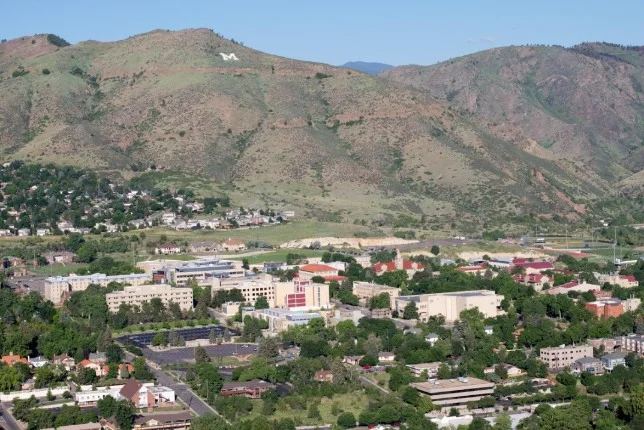
The 373-acre Golden campus features the CoorsTek Center for Applied Science, Edgar Mine experimental facility, and cutting-edge robotics labs. Its graduates command the highest starting salaries among Colorado public universities.
At 59.7%, admission to Colorado School of Mines is achievable for most students who meet the basic academic profile.

Source: IPEDS & College Scorecard (Nov 2025).
Colorado School of Mines follows a Rolling Admissions policy, meaning applications are reviewed as they arrive and there is no single fixed deadline, though the priority deadline of November 1 is recommended for the best chances of admission and financial aid.
Mines reviews applications continuously throughout the year. Seats and scholarships are awarded on a first-come, first-served basis, so applying early gives you a significant advantage for both admission and financial aid.
💡 The scholarship deadline (2026/03/01 (general scholarship application)) often falls before the regular admission deadline. Submit your application and FAFSA early to be considered for maximum aid.
Deadlines are verified from official institutional sources but may change each cycle. Always confirm final dates on the official website.
The average GPA of admitted students at Mines is 3.84. That makes admissions here extremely selective. Most admitted students carry straight A's, with very little room for a B.
If your GPA sits between 3.54 and 3.84, a high SAT or ACT score is the most reliable way to compensate.
Most schools report GPA on a weighted or unweighted 4.0 scale differently. For an unweighted profile like this, students with AP/IB coursework typically carry a weighted GPA of 4.04–4.24.Assessment: Highly selective; GPA is within the typical admitted range.
Recommended Strategy: Standardized Test Scores (SAT/ACT) in the top 5th percentile.
Where your GPA falls in this range shapes what the rest of your application needs to do:
Data verified via IPEDS, College Scorecard (Nov 2025) and the Common Data Set (CDS). Expert Review led by Sohaib Khan and Dr. Waseem.
Real-Time Sensitive Analysis — based on Colorado School of Mines's verified institutional data
Adjust the sliders to see how every decimal point affects your outcome.
✅ Verified Data: Institutional records for 2026.
Calculated via College Portal's Human-Intelligence (HI) Methodology & Editorial Standards. Verified by Sohaib Ahmad Khan.
Standardized scores still matter here: aim for the middle 50% range of the 2026 admitted class below, and if Mines is test-optional, a high score submitted voluntarily still helps with merit scholarships.
The average SAT score of admitted students at Colorado School of Mines is 1403 on the 1600-point scale.

A 1403 average puts Mines well above the national mean SAT score.
If your score is below 1320, retaking the SAT is strongly recommended to improve your chances at Mines. Retaking multiple times is completely normal. Most competitive applicants sit for it two or three times. There's no official limit on attempts.
| Section | Average | 25th Percentile | 75th Percentile |
|---|---|---|---|
| SAT Math | 710 | 670 | 750 |
| SAT Reading | 685 | 650 | 720 |
| SAT Composite | 1403 | 1320 | 1470 |
Below 1320, you're behind most admitted students; at 1470 or above, you're ahead of 75% of them. (25th/75th percentile = the score below which that share of admitted students fall.)
View list of all colleges with average SAT score of 1400
A 1450 SAT puts you ahead of most of Mines's admitted class, but admissions still weighs GPA, course rigor, and essays alongside it. A strong score opens the door; the rest of your profile decides what happens next.
The average ACT score at Mines is 31.
An average of 31 is well above the national ACT mean.
| Section | Average | 25th Percentile | 75th Percentile |
|---|---|---|---|
| ACT Math | 31 | 28 | 34 |
| ACT English | 31 | 28 | 33 |
| ACT Composite | 31 | 29 | 33 |
A 33 ACT puts you ahead of 75% of Mines's admitted students. That's a strong position, though the ACT is only one benchmark among several that admissions weighs.
Unlike the SAT, the ACT scores four separate sections: English, Math, Reading, and Science, each on a 1–36 scale. A noticeably weak section, especially Science at STEM-focused schools, stands out to reviewers, so it's worth checking your section breakdown for outliers before applying.
Your ACT score clears the first filter, but GPA, course rigor, extracurricular depth, recommendations, and essays are what carry an application the rest of the way at Mines.
Getting into Mines isn't the hard part. Building a solid academic foundation and securing aid early is where the real strategy lives.
Mines' own admissions office publishes two optional prompts - "What element on the periodic table best represents you and why?" (250 words) and "Why do you want to be an Oredigger?" (no word count publicly stated, but consistent with 250 words across guide sources) - and confirms they look at all optional materials in holistic review. Every credible essay guide notes that skipping them signals lower interest at a school where "Oredigger identity" is a real, named part of the institutional culture. Submit both unless time genuinely doesn't permit quality responses.
This prompt is explicitly a creative self-reflection exercise, not a chemistry knowledge test - Mines' own admissions page frames it as an opportunity to share a personal story that wouldn't otherwise appear. Map personal qualities to an element's actual or symbolic properties (resilience like tungsten, catalytic like platinum, adaptable like carbon) and anchor the metaphor in a brief concrete anecdote, rather than simply listing the element's chemistry without connecting it to a lived experience.
Generic "I love STEM and the environment" responses are the most common failure pattern for this prompt. Push students to name concrete Mines specifics: the Renewable Energy Materials Research Science and Engineering Center (REMRSEC), the Jefferson Project partnership at Lake George, the M Climb tradition (a campus ritual where freshmen carry a 50-pound rock up Mount Zion and return as upperclassmen to paint the giant M on the hill), or the Golden location adjacent to the National Renewable Energy Laboratory. Admissions readers distinguish students who've researched Mines from those using any available school's essay.
Mines' own Admissions Considerations page explicitly states that while GenAI tools like ChatGPT and Gemini are "especially useful for generating and organizing ideas," the final submission should represent the student's own work - a directly stated policy worth flagging specifically to students and families, since Mines names individual AI products explicitly in its own guidance.
Don't let a student treat Mines' ~60% acceptance rate as evidence it's easily achievable for any STEM student - admitted students show a strongly technical academic profile (minimum 4 years of college-prep or advanced math through at least trigonometry or precalculus, and 3 years of lab science including physics or chemistry) and the admissions committee explicitly weights STEM course rigor and trends from grades 9-11, not just overall GPA.
At $38,556/year against a $97,335 median graduate salary, Mines is worth weighing against your specific program and financial situation. The numbers below give you a real basis for that decision.
The average household income among admitted students is $74,400, with a graduate unemployment rate of 2.63%.
The sticker price is $38,556/year, but the average net price students actually pay, after Pell and federal grants, is closer to $29,240.
13.3% of students receive a Pell Grant and 33.6% take federal loans at Mines. File your FAFSA early and list Mines as a choice to be considered for both.
Median earnings 10 years after enrollment (roughly 4–6 years post-graduation) are $97,335. That's about 140% above the U.S. median graduate income.

These schools have lower average SAT or ACT scores than Colorado School of Mines. If your SAT or ACT score is slightly lower, you'll be competitive for these schools.
| School | Location | SAT | ACT |
|---|---|---|---|
| Chapman University | Orange, CA | 1353 | 30 |
| Pepperdine University | Malibu, CA | 1367 | 29 |
| Westmont College | Santa Barbara, CA | 1367 | 32 |
| University of Colorado Boulder | Boulder, CO | 1353 | 31 |
| United States Air Force Academy | USAF Academy, CO | 1362 | 30 |
| American University | Washington, DC | 1392 | 31 |
| Wheaton College | Wheaton, IL | 1363 | 30 |
| Rose-Hulman Institute of Technology | Terre Haute, IN | 1389 | 32 |
| St. John's College | Annapolis, MD | 1381 | 31 |
| Emerson College | Boston, MA | 1359 | 32 |

These schools have the same range of average SAT or ACT scores as Colorado School of Mines. If your SAT or ACT score is competitive, you'll be competitive for these schools also.
| School | Location | SAT | ACT |
|---|---|---|---|
| Connecticut College | New London, CT | 1412 | 32 |
| Trinity College | Hartford, CT | 1396 | 32 |
| University of Florida | Gainesville, FL | 1397 | 31 |
| Simpson College | Indianola, IA | 1410 | 32 |
| University of Massachusetts-Amherst | Amherst, MA | 1393 | 31 |

These schools have higher average SAT or ACT scores than Colorado School of Mines. If you improve your SAT or ACT score, you'll be competitive for these schools.
| School | Location | SAT | ACT |
|---|---|---|---|
| Northeastern University Oakland | Oakland, CA | 1472 | 32 |
| Occidental College | Los Angeles, CA | 1461 | 33 |
| Scripps College | Claremont, CA | 1480 | 33 |
| Colorado College | Colorado Springs, CO | 1445 | 33 |
| George Washington University | Washington, DC | 1433 | 33 |
Colorado School of Mines graduates typically earn around $97,335 a year, on the higher end depending on industry.
Colorado School of Mines costs roughly $38,556 a year, and most students combine this with scholarships or aid.
Colorado School of Mines's Pell Grant rate of 13.3% sits below the national average. Merit-based aid is worth checking regardless of income.
At 59.7%, Colorado School of Mines's acceptance rate is on the more attainable end compared to top-tier selective schools.
Admitted students at Colorado School of Mines average a 3.84 GPA.
Colorado School of Mines doesn't publish a hard GPA floor, but landing at or above 3.54 keeps you in the typical applicant range; below it, lean on essays and recommendations.
Below 3.44, Colorado School of Mines becomes a harder reach, though a strong test score, meaningful activities, and AP/IB coursework can still make a real case.
A strong SAT score matters at Colorado School of Mines — aim above 1403, ideally within the 1320–1470 range admitted students typically fall in.
The application deadline for Colorado School of Mines is November 1 for Priority Application Deadline applicants. Admission decisions are released by December 15. Rolling Admissions is also offered, so applying early improves your chances.
The application fee is 50. Fee waivers may be available. Check with admissions.
The scholarship/financial aid priority deadline is 2026/03/01 (general scholarship application). Submit FAFSA before then for maximum consideration.
Yes, transfers are common. Have transcripts, recommendation letters, and a solid personal statement ready to make your case.
Strong academics, a focused extracurricular profile, and standout essays move the needle most, along with a competitive SAT/ACT score where relevant.