
Non-Profit Private
Accredited · Higher Learning Commission
Kansas City, Missouri
60.4% Acceptance Rate
A complete at-a-glance picture of every metric that matters for your 2026 application
Kansas City Art Institute, founded in 1885, is one of the nation's premier colleges of art and design. The institute is particularly renowned for its illustration, ceramics, and animation programs.
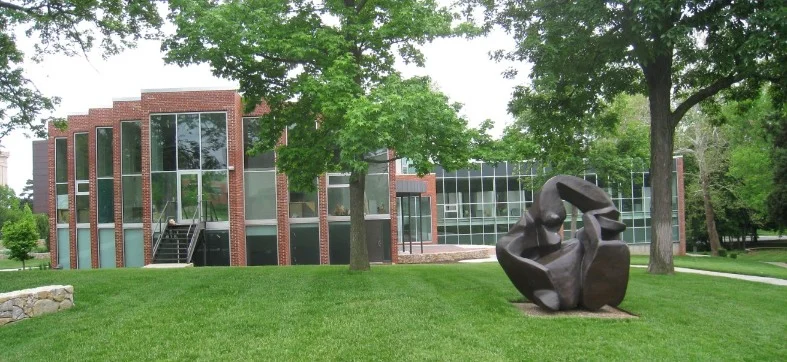
The campus features specialized facilities including glassblowing studios, digital fabrication labs, and the H&R Block Artspace gallery. Students benefit from Kansas City's vibrant arts community and the school's strong industry connections.
Kansas City Art Institute is moderately selective. 60.4% of applicants are admitted, with room for a well-rounded, if imperfect, transcript.

Source: IPEDS & College Scorecard (Nov 2025).
Mark November 1 for Kansas City Art Institute (Early Action — other plans are listed below).
💡 The scholarship deadline (Priority scholarship consideration: 2026/02/01) often falls before the regular admission deadline. Submit your application and FAFSA early to be considered for maximum aid.
Deadlines are verified from official institutional sources but may change each cycle. Always confirm final dates on the official website.
The average GPA of admitted students at Kansas City Art Institute is 3.32. That makes admissions here competitive, but not extremely selective. Most admitted students carry a mix of A's and B's.
In the 3.02–3.32 range, a high SAT or ACT score still carries real weight.
Note the scale: this figure reflects an unweighted 4.0 GPA. Add AP or IB coursework and the equivalent weighted GPA usually lands around 3.52–3.72.Assessment: Admission here leans heavily on holistic review.
Recommended Strategy: Leans on context, such as leadership, personal circumstances, or a standout talent.
This range is a rough map. Where you land determines what else needs to carry weight in your application.:
Data verified via IPEDS, College Scorecard (Nov 2025) and the Common Data Set (CDS). Expert Review led by Sohaib Khan and Dr. Waseem.
Built from Kansas City Art Institute's own verified admissions data — adjust the sliders below
Adjust the sliders to see how every decimal point affects your outcome.
⚠️ Note: Predicting based on regional averages as this institution does not publicly report full score datasets.
Calculated via College Portal's Human-Intelligence (HI) Methodology & Editorial Standards. Verified by Sohaib Ahmad Khan.
Scores aren't just a formality at Kansas City Art Institute. Landing within or above the 2026 admitted class's middle 50% keeps you fully competitive, even where submission is optional.
Kansas City Art Institute takes a broad view of applicants. Your energy is best spent proving readiness for coursework and maximizing your financial aid package.
KCAI does not use the Common App, does not consider SAT/ACT scores, and charges no application fee. The portfolio (10?15 images of recent work demonstrating both technical skill and conceptual thinking) is the central admissions document, and scholarship decisions are made based on that same portfolio review - not a separate process. Get your work reviewed before you apply: KCAI offers free 1-on-1 virtual portfolio reviews with admissions counselors in 30-minute slots, and virtual National Portfolio Day sessions. Students who apply without a pre-submission review miss free, targeted feedback that directly affects both their admission and their aid package.
KCAI's required personal statement (~500 words, available in written or video format) asks three specific things: your background and experience in art, your artistic goals while at KCAI, and your ambitions and career goals after graduation. The admissions committee is explicitly reading for authenticity - "as authentic as you are" is the language on their own page. Generic answers about wanting to "express yourself" or "pursue your passion" won't distinguish you in a pool of practicing artists. Ground your statement in specific media, specific problems you're trying to solve, and specific KCAI departments or faculty whose work connects to yours.
KCAI's Pre-College ArtLab (PCAL) is a three-week summer residential program for high school students that costs $2,500 and includes three college credits, housing, meals, and supplies. Every student who completes PCAL and enrolls in the BFA program receives an annual $1,000 renewable scholarship on top of any merit aid and FAFSA-based aid - and the Interdisciplinary studio track earns a $2,000 annual renewable scholarship instead. The March 1 application deadline applies for scholarship consideration and priority studio placement. Given that tuition is the primary affordability concern at KCAI, this stacking mechanism makes PCAL an investment that pays for itself within the first semester of the BFA program.
KCAI offers 13 BFA majors across departments including Animation, Ceramics, Creative Writing, Fiber, Filmmaking, Graphic Design, Illustration, Painting, and more. Admissions counselors notice when an applicant's portfolio, personal statement, and campus research all point to the same specific department - it signals focused intention. Beyond classroom work, the Sponsored Studio program embeds students into paid-client projects with partners like the KC Royals, Humana, and UMB Bank. Students who apply without knowing which department they're targeting lose the narrative coherence that the portfolio and personal statement need to achieve together.
KCAI's reputation as a rolling-admissions school with no hard cutoff leads some students to delay applying, not realizing that scholarships are awarded on a first-come, first-served basis - the December 1 fall deadline is the meaningful target for merit aid. The school also has a notably high drop rate that returning students mention; the workload is far more demanding than students accustomed to "art class" expect, and students who arrive without understanding that KCAI functions on a professional-studio schedule often leave after the first year.
Whether Kansas City Art Institute is worth it depends less on its reputation and more on your program choice, financial aid package, and career goals. Here's the data to weigh it against.
Admitted students' families report a median household income around $67,700, and graduates see a 2.69% unemployment rate.
Listed tuition runs $57,779/year at Kansas City Art Institute. Factor in Pell and federal grant aid, and most students land typically much lower.
At Kansas City Art Institute, 41.7% receive a Pell Grant and 70.2% carry federal loans. Filing FAFSA early and naming Kansas City Art Institute on it improves your shot at both.
Ten years out from enrollment, Kansas City Art Institute graduates report a median income of $37,032, somewhat below the U.S. median graduate income of $40,595.
Kansas City Art Institute graduates earn a lower median salary of $37,032/year, especially outside technical fields.
Tuition at Kansas City Art Institute runs high, at roughly $57,779+/year, so financial aid planning matters.
41.7% of Kansas City Art Institute students get a Pell Grant. Your odds depend mostly on household income, and filing FAFSA early still helps maximize what you're offered.
Kansas City Art Institute's acceptance rate is 60.4%, comparatively higher than most selective universities. Admission is more attainable here.
The average GPA of admitted Kansas City Art Institute students is 3.32, reflecting a competitive applicant pool.
There's no strict cutoff, but a GPA at or above 3.02 puts you in the standard applicant pool at Kansas City Art Institute. Below that, your essays and recommendations need to work harder to provide context.
A GPA of 2.92 or below makes admission tougher at Kansas City Art Institute, but strong test scores, activities, and essays, plus AP/IB coursework, can still keep you in contention.
Kansas City Art Institute's deadline is November 1 (Early Action).
Kansas City Art Institute charges an application fee of 40; ask admissions about waiver eligibility if cost is a barrier.
For priority financial aid consideration, get your FAFSA in before Priority scholarship consideration: 2026/02/01. That's Kansas City Art Institute's scholarship priority date.
Transferring in is a well-trodden path here. Line up your transcripts, recommendations, and a strong personal statement before applying.
The biggest levers are academic performance, a clear extracurricular focus, and essays that stand out, plus a solid test score where the school considers one.