
Public
Accredited · Higher Learning Commission
Tsaile, Arizona
A complete at-a-glance picture of every metric that matters for your 2026 application
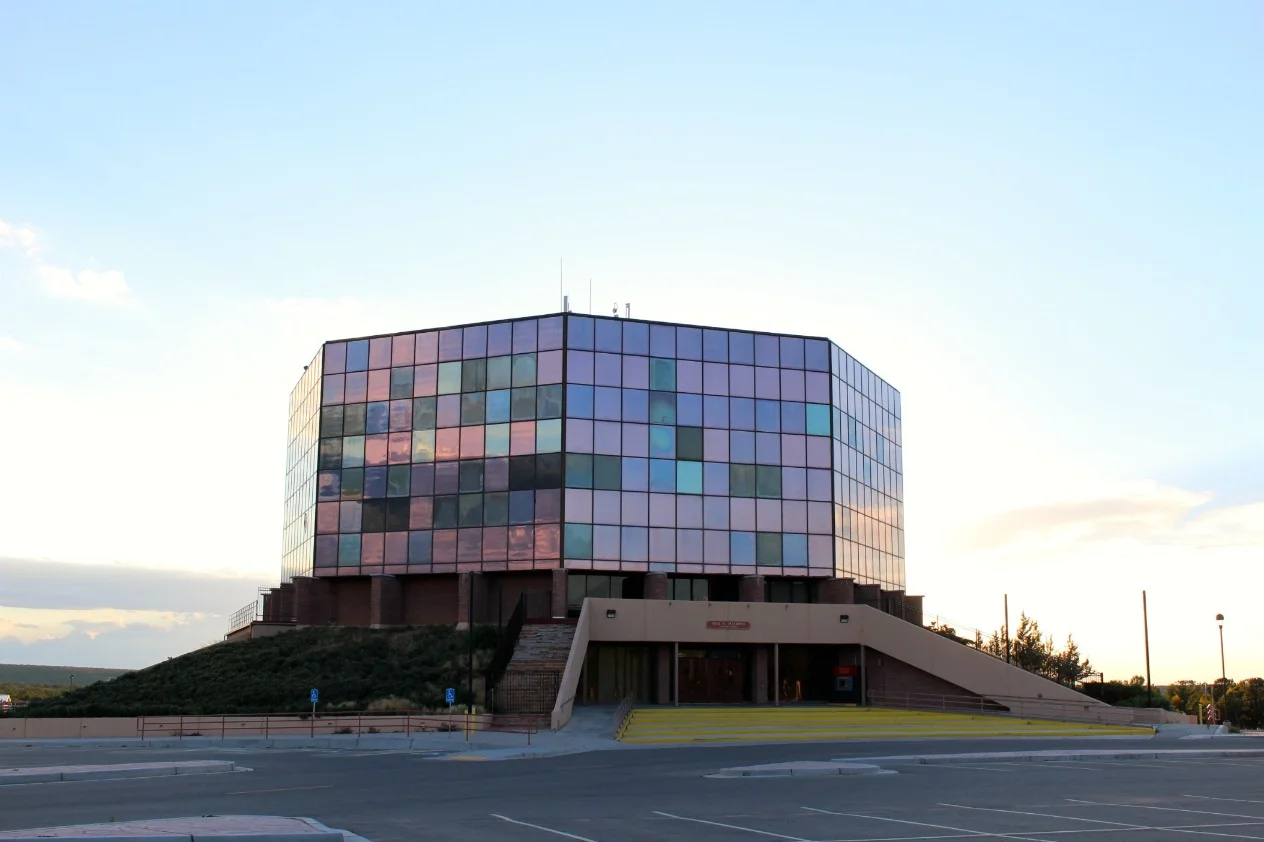
Dine College, founded in 1968, is the first tribally controlled college in the U.S., serving the Navajo Nation across Arizona and New Mexico. The campus incorporates traditional hogan structures.
Dine is unranked but culturally significant, blending Western education with Navajo language and traditions. Its remote locations serve indigenous communities across the Southwest.
Dine College runs an open-access admission policy. With a 100% acceptance rate, the focus is on getting qualified students in, not filtering them out.

Slightly below-average GPA? A strong test score or clear leadership track record can still keep you competitive.
Source: IPEDS & College Scorecard (Nov 2025).
Dine College follows a Rolling Admissions policy, meaning applications are reviewed as they arrive and there is no single fixed deadline.
Dine College reviews applications continuously throughout the year. Seats and scholarships are awarded on a first-come, first-served basis, so applying early gives you a significant advantage for both admission and financial aid.
Deadlines are verified from official institutional sources but may change each cycle. Always confirm final dates on the official website.
Real-Time Sensitive Analysis — based on Dine College's verified institutional data
Adjust the sliders to see how every decimal point affects your outcome.
⚠️ Note: Predicting based on regional averages as this institution does not publicly report full score datasets.
Calculated via College Portal's Human-Intelligence (HI) Methodology & Editorial Standards. Verified by Sohaib Ahmad Khan.
Standardized scores still matter here: aim for the middle 50% range of the 2026 admitted class below, and if Dine College is test-optional, a high score submitted voluntarily still helps with merit scholarships.
Dine College provides an open gateway to higher education. Success here is about using available resources well and planning your longer-term academic or career path.
Din? College is open to all Native students regardless of tribal affiliation, plus non-Native students, but your Certificate of Indian Blood (CIB) or enrollment card - submitted with your $20 application and matched exactly to your legal name - is what unlocks tuition benefits and financial aid tied to tribal status. Students who delay this document lose a semester's worth of aid processing time. Get the CIB request started through your chapter house before you touch the online application.
Din? College isn't one campus - Tsaile is the residential administrative hub, Shiprock has built specific strength in scientific research programs with faculty-student collaboration, and Crownpoint/Tuba City serve as community centers. If a student wants dorm life, Tsaile is the only option; if they want a STEM research foothold, Shiprock's track record is the better fit. Naming the wrong site on the application creates avoidable advising delays.
Unlike general admission, the BA in Din? Studies (the teacher-licensure pathway with a 95% job-placement rate into Navajo-area schools) requires its own application: an Associate's in Din? Studies at 2.5 GPA, a timed essay written in Navajo, and an admissions interview with Navajo Language faculty. Students aiming at this track need to be building Navajo-language fluency years before senior year - it's not a check-box requirement, it's a competency gate.
Din? College fields teams in Archery, Cross Country, and Rodeo - sports with far less national recruiting pressure than football or basketball. A student with even modest rodeo or archery background has a realistic shot at a roster spot and the campus standing (and scholarship conversations) that comes with it, especially valuable for a residential-life application at Tsaile.
Sources conflict on transfer admission: Din? College's own FAQ describes an active transfer-credit evaluation process (capping at 40 credits below 300-level and 64 credits at 300-level for a Bachelor's), while at least one third-party aggregator lists "transfer applications not accepted." Do not assume prior credits will transfer cleanly - have the student call Admissions (928-724-6638) directly to confirm evaluation before banking on those credits.
Dine College offers a rigorous academic environment, but 'worth it' is a personal calculation of cost, program fit, and outcomes. The figures below are a starting point.
The average household income among admitted students is $32,400, with a graduate unemployment rate of 10.85%.
The sticker price is $13,872/year, but the average net price students actually pay, after Pell and federal grants, is closer to $10,218.
39% of students receive a Pell Grant and % take federal loans at Dine College. File your FAFSA early and list Dine College as a choice to be considered for both.
Median earnings 10 years after enrollment (roughly 4–6 years post-graduation) are $29,188. That's somewhat below the U.S. median graduate income of $40,595.
Median earnings for Dine College graduates sit around $29,188 a year.
At about $13,872 a year, Dine College is on the more affordable end.
About 39.0% receive a Pell Grant at Dine College. The odds are moderate and largely income-dependent, but an early FAFSA filing still helps.
Dine College follows Rolling Admissions. Applications are reviewed year-round, so applying early is your best strategy.
The application fee is 20. Fee waivers may be available. Check with admissions.
Yes, transfers are common. Have transcripts, recommendation letters, and a solid personal statement ready to make your case.
Strong academics, a focused extracurricular profile, and standout essays move the needle most, along with a competitive SAT/ACT score where relevant.