
Public
Accredited · New England Commission on Higher Education
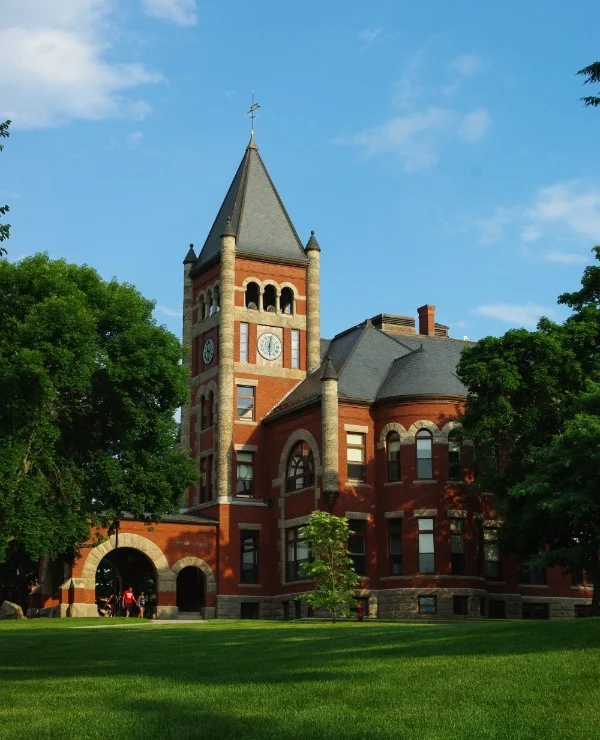
Durham, New Hampshire
86.9% Acceptance Rate
A complete at-a-glance picture of every metric that matters for your 2026 application
University of New Hampshire-Main Campus is a major land-grant research university that balances flagship academic rigor with a strong commitment to undergraduate research. Admissions are selective, seeking students who have challenged themselves with a demanding high school curriculum. Applicants should focus on demonstrating sustained intellectual curiosity, involvement in research or independent projects, and a clear vision for how they will contribute to the university's scholarly community.
University of New Hampshire-Main Campus runs an open-access admission policy. With a 86.9% acceptance rate, the focus is on getting qualified students in, not filtering them out.

Source: IPEDS & College Scorecard (Nov 2025).
The application deadline for University of New Hampshire-Main Campus is February 1 for Regular Decision applicants, with additional plans listed below. Admission decisions are typically released by March 31.
💡 The scholarship deadline (2027/03/01 (UNH Undergraduate Admissions)) often falls before the regular admission deadline. Submit your application and FAFSA early to be considered for maximum aid.
Deadlines are verified from official institutional sources but may change each cycle. Always confirm final dates on the official website.
The average GPA of admitted students at University of New Hampshire-Main Campus is 3.58. That makes admissions here highly selective. Most admitted students carry mostly A's with the occasional B.
Between 3.28 and 3.58? A strong standardized test score is worth prioritizing.
Most schools report GPA on a weighted or unweighted 4.0 scale differently. For an unweighted profile like this, students with AP/IB coursework typically carry a weighted GPA of 3.78–3.98.Assessment: Selective; solid academic performance is expected.
Recommended Strategy: Focus on a Strong 'Spike' in extracurriculars or research.
Where your GPA falls in this range shapes what the rest of your application needs to do:
Data verified via IPEDS, College Scorecard (Nov 2025) and the Common Data Set (CDS). Expert Review led by Sohaib Khan and Dr. Waseem.
Real-Time Sensitive Analysis — based on University of New Hampshire-Main Campus's verified institutional data
Adjust the sliders to see how every decimal point affects your outcome.
✅ Verified Data: Institutional records for 2026.
Calculated via College Portal's Human-Intelligence (HI) Methodology & Editorial Standards. Verified by Sohaib Ahmad Khan.
Standardized scores still matter here: aim for the middle 50% range of the 2026 admitted class below, and if University of New Hampshire-Main Campus is test-optional, a high score submitted voluntarily still helps with merit scholarships.
The average SAT score of admitted students at University of New Hampshire-Main Campus is 1229 on the 1600-point scale.

This sits close to the national average SAT score.
If your score is below 1120, retaking the SAT is strongly recommended to improve your chances at University of New Hampshire-Main Campus. Retaking multiple times is completely normal. Most competitive applicants sit for it two or three times. There's no official limit on attempts.
| Section | Average | 25th Percentile | 75th Percentile |
|---|---|---|---|
| SAT Math | 600 | 550 | 650 |
| SAT Reading | 620 | 570 | 670 |
| SAT Composite | 1229 | 1120 | 1320 |
Below 1120, you're behind most admitted students; at 1320 or above, you're ahead of 75% of them. (25th/75th percentile = the score below which that share of admitted students fall.)
View list of all colleges with average SAT score of 1250
A 1300 SAT puts you ahead of most of University of New Hampshire-Main Campus's admitted class, but admissions still weighs GPA, course rigor, and essays alongside it. A strong score opens the door; the rest of your profile decides what happens next.
The average ACT score at University of New Hampshire-Main Campus is 29.

This average is solidly above the national mean without being elite-tier.
| Section | Average | 25th Percentile | 75th Percentile |
|---|---|---|---|
| ACT Math | 26 | 23 | 28 |
| ACT English | 29 | 25 | 33 |
| ACT Composite | 29 | 26 | 31 |
A 31 ACT puts you ahead of 75% of University of New Hampshire-Main Campus's admitted students. That's a strong position, though the ACT is only one benchmark among several that admissions weighs.
Unlike the SAT, the ACT scores four separate sections: English, Math, Reading, and Science, each on a 1–36 scale. A noticeably weak section, especially Science at STEM-focused schools, stands out to reviewers, so it's worth checking your section breakdown for outliers before applying.
Your ACT score clears the first filter, but GPA, course rigor, extracurricular depth, recommendations, and essays are what carry an application the rest of the way at University of New Hampshire-Main Campus.
University of New Hampshire-Main Campus takes a broad view of applicants. Your energy is best spent proving readiness for coursework and maximizing your financial aid package.
UNH offers a "Spring Decision" plan (October 15 deadline, decision by end of December) in addition to standard Early Action (November 15, decision by end of January) and Regular Decision (February 1, decision by end of March). Despite its name, Spring Decision functions like an even-earlier non-binding option and is worth using for students who have finalized their college list early and want fastest possible certainty - particularly valuable for families managing financial aid comparisons across multiple schools on different timelines. No supplemental essay is required beyond the standard Common App essay, so the application timeline is driven almost entirely by transcript readiness, not essay-writing time.
UNH directly admits very few students into Nursing, Occupational Therapy, Health Sciences, or any Paul College of Business and Economics major - these are restricted majors requiring an internal transfer application after completing specific prerequisite coursework (such as Biomedical Science 507/508, Psychology 401) and meeting GPA thresholds that range from 2.75 to 3.2 depending on the program. External transfer students are generally not admitted directly into Nursing or Occupational Therapy due to long internal waitlists - meaning a student who wants nursing should apply to UNH directly as a first-year, not plan to transfer in for it later. Students unsure of admission to their first-choice competitive major are often placed in COLA Undeclared, from which 30% of UNH students successfully complete an internal transfer to their target major.
Students from other New England states admitted to a New England Regional Student Program (NERSP)-approved major pay UNH in-state tuition plus only 75% - a significant discount from full out-of-state rates. But this benefit is tied specifically to the approved major: if a NERSP student changes to a non-participating major before graduating, they lose the discount and must pay full out-of-state tuition for all remaining semesters, not just going forward from the switch. Students from Maine, Massachusetts, Vermont, Connecticut, or Rhode Island should treat their major choice as a financial decision, not just an academic one, and confirm NERSP status of any prospective major change with admissions before switching.
UNH requires a single $600 deposit by May 1 (National College Decision Day) that covers both enrollment confirmation and housing - and first-year and transfer students under 21 are required to live on campus for their first two years. This combined structure means families should budget for on-campus housing costs as a near-certainty for the first two years rather than planning around off-campus options, which significantly affects total cost-of-attendance calculations during the admitted-student decision period.
The most common and costly failure pattern at UNH is students assuming that admission to UNH itself guarantees admission to their intended major - particularly in health sciences, nursing, and business. A student admitted to UNH as "COLA Undeclared" or a related catch-all category may believe they're on track for nursing or business simply because they got into the university, then discover at the end of year one that the internal transfer process is genuinely competitive (often only 0?10 spaces available annually for programs like Occupational Therapy or Nursing) and requires a separate application, specific prerequisite grades, and sometimes an interview. Students with a clear target major in a restricted program should apply directly to that major as first-year applicants, not assume internal transfer will work out.
Whether University of New Hampshire-Main Campus is worth it depends less on its reputation and more on your program choice, financial aid package, and career goals. Here's the data to weigh it against.
The average household income among admitted students is $77,500, with a graduate unemployment rate of 2.51%.
The sticker price is $34,567/year, but the average net price students actually pay, after Pell and federal grants, is closer to $23,261.
17.7% of students receive a Pell Grant and 57.7% take federal loans at University of New Hampshire-Main Campus. File your FAFSA early and list University of New Hampshire-Main Campus as a choice to be considered for both.
Median earnings 10 years after enrollment (roughly 4–6 years post-graduation) are $66,479. That's about 64% above the U.S. median graduate income.

These schools have lower average SAT or ACT scores than University of New Hampshire-Main Campus. If your SAT or ACT score is slightly lower, you'll be competitive for these schools.
| School | Location | SAT | ACT |
|---|---|---|---|
| Birmingham-Southern College | Birmingham, AL | 1197 | 24 |
| Samford University | Birmingham, AL | 1203 | 26 |
| Harding University | Searcy, AR | 1187 | 25 |
| Ouachita Baptist University | Arkadelphia, AR | 1212 | 25 |
| Dominican University of California | San Rafael, CA | 1194 | 26 |
| Eastern Connecticut State University | Willimantic, CT | 1200 | NA |
| University of Hartford | West Hartford, CT | 1207 | 29 |
| University of New Haven | West Haven, CT | 1190 | NA |
| Quinnipiac University | Hamden, CT | 1212 | 27 |
| Howard University | Washington, DC | 1205 | 25 |

These schools have the same range of average SAT or ACT scores as University of New Hampshire-Main Campus. If your SAT or ACT score is competitive, you'll be competitive for these schools also.
| School | Location | SAT | ACT |
|---|---|---|---|
| University of Mobile | Mobile, AL | 1220 | 24 |
| John Brown University | Siloam Springs, AR | 1222 | 26 |
| California Lutheran University | Thousand Oaks, CA | 1224 | 26 |
| University of Redlands | Redlands, CA | 1231 | 28 |
| University of South Florida | Tampa, FL | 1235 | 27 |

These schools have higher average SAT or ACT scores than University of New Hampshire-Main Campus. If you improve your SAT or ACT score, you'll be competitive for these schools.
| School | Location | SAT | ACT |
|---|---|---|---|
| The University of Alabama | Tuscaloosa, AL | 1287 | 28 |
| University of Arizona | Tucson, AZ | 1261 | 26 |
| University of the Pacific | Stockton, CA | 1303 | 27 |
| Point Loma Nazarene University | San Diego, CA | 1278 | 26 |
| Thomas Aquinas College | Santa Paula, CA | 1277 | 29 |
Median graduate earnings at University of New Hampshire-Main Campus run about $66,479 a year.
University of New Hampshire-Main Campus costs roughly $34,567 a year, and most students combine this with scholarships or aid.
University of New Hampshire-Main Campus's Pell Grant rate of 17.7% sits below the national average. Merit-based aid is worth checking regardless of income.
At 86.9%, University of New Hampshire-Main Campus's acceptance rate is on the more attainable end compared to top-tier selective schools.
Admitted students at University of New Hampshire-Main Campus average a 3.58 GPA.
University of New Hampshire-Main Campus doesn't publish a hard GPA floor, but landing at or above 3.28 keeps you in the typical applicant range; below it, lean on essays and recommendations.
Below 3.18, University of New Hampshire-Main Campus becomes a harder reach, though a strong test score, meaningful activities, and AP/IB coursework can still make a real case.
A strong SAT score matters at University of New Hampshire-Main Campus — aim above 1229, ideally within the 1120–1320 range admitted students typically fall in.
The application deadline for University of New Hampshire-Main Campus is February 1 for Regular Decision applicants. Admission decisions are released by March 31.
The application fee is 50. Fee waivers may be available. Check with admissions.
The scholarship/financial aid priority deadline is 2027/03/01 (UNH Undergraduate Admissions). Submit FAFSA before then for maximum consideration.
Yes, transfers are common. Have transcripts, recommendation letters, and a solid personal statement ready to make your case.
Strong academics, a focused extracurricular profile, and standout essays move the needle most, along with a competitive SAT/ACT score where relevant.