
Non-Profit Private
Accredited · Southern Association of Colleges and Schools Commission on Colleges
Columbia, South Carolina
32.1% Acceptance Rate
A complete at-a-glance picture of every metric that matters for your 2026 application
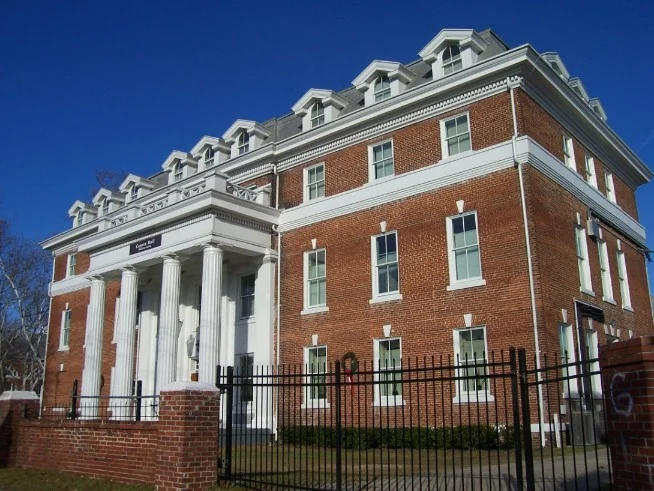
Allen University Allen University, founded in 1870 in Columbia, South Carolina, is a historically black university affiliated with the African Methodist Episcopal Church. As one of South Carolina's oldest HBCUs, Allen provides a values-based education emphasizing leadership development and social responsibility. The university offers undergraduate programs in business, humanities, natural sciences, and theology through its School of Arts and Sciences and Dickerson-Green Theological Seminary. The compact urban campus features historic buildings alongside modern facilities like the recently renovated Chappelle Administration Building. Allen maintains a 12:1 student-faculty ratio, fostering close mentoring relationships between students and professors.
Allen University takes pride in its spiritual foundation and commitment to serving the African-American community. The university's curriculum integrates faith and learning across all disciplines, preparing students for both professional careers and community leadership. Campus life includes active Greek organizations and the renowned Allen University Choir. The university has expanded its STEM offerings while preserving its strong liberal arts tradition. Allen's small size creates a close-knit community where students receive personalized attention. As it approaches its 150th anniversary, Allen University continues its mission of providing accessible, transformative education rooted in Christian values and African-American heritage.
At an acceptance rate of 32.1%, Allen University rewards applicants who show real academic growth rather than a flawless transcript.

Slightly below-average GPA? A strong test score or clear leadership track record can still keep you competitive.
Source: IPEDS & College Scorecard (Nov 2025).
Allen University follows a Rolling Admissions policy, meaning applications are reviewed as they arrive and there is no single fixed deadline.
Allen University reviews applications continuously throughout the year. Seats and scholarships are awarded on a first-come, first-served basis, so applying early gives you a significant advantage for both admission and financial aid.
💡 The scholarship deadline (March 1, 2026) often falls before the regular admission deadline. Submit your application and FAFSA early to be considered for maximum aid.
Deadlines are verified from official institutional sources but may change each cycle. Always confirm final dates on the official website.
Real-Time Sensitive Analysis — based on Allen University's verified institutional data
Adjust the sliders to see how every decimal point affects your outcome.
⚠️ Note: Predicting based on regional averages as this institution does not publicly report full score datasets.
Calculated via College Portal's Human-Intelligence (HI) Methodology & Editorial Standards. Verified by Sohaib Ahmad Khan.
Standardized scores still matter here: aim for the middle 50% range of the 2026 admitted class below, and if Allen University is test-optional, a high score submitted voluntarily still helps with merit scholarships.
Allen University rewards consistency. Being a top-quartile applicant here doesn't just help admission odds. It's usually what unlocks the strongest scholarship offers too.
Allen University's Chappelle Auditorium is not simply a historic building - it is the room where educators and lawyers met to initiate the legal work that led to *Briggs v. Elliott*, one of the five cases consolidated into *Brown v. Board of Education* (1954). The auditorium has also hosted Langston Hughes, Leontyne Price, Rev. Martin Luther King Jr., and Muhammad Ali. The Chappelle Administration Building itself was designed by John Anderson Lankford, known as the "Dean of Black Architects," and is a National Historic Landmark. For applicants who are drawn to Allen because of its civil rights legacy and AME heritage, write about this connection concretely - not generically. A student who can name Chappelle Auditorium and explain what happened there demonstrates genuine engagement.
Allen University was founded in 1870 as Payne Institute by ministers of the African Methodist Episcopal Church during Reconstruction to educate freedmen. It was renamed in 1880 to honor Richard Allen, founder of the AME Church. Today the university remains connected to the denomination, which shapes the culture of campus ministry, chapel life, and the graduate divinity program - which offers an M.Div. and M.A. in Religion preparing students for careers as pastors, chaplains, and Christian educators. For students who share AME heritage or are drawn to faith-rooted HBCU education specifically, Allen's denominational identity is a genuine value, not background noise. For students ambivalent about faith integration, ask admissions directly what campus religion requirements look like in practice.
Allen University sits on a 24-acre campus at 1530 Harden Street in Columbia, South Carolina's state capital, a short distance from the University of South Carolina. That proximity matters for internships, cross-registration possibilities, and the professional infrastructure of a state capital. Students in criminal justice, education, business administration, and social sciences are well-positioned to access state government offices, legal institutions, and corporate employers in Columbia. The USC campus and its resources are nearby; Allen students who proactively seek out that adjacent ecosystem consistently have richer professional development than those who remain within Allen's compact campus alone.
Allen's tuition is approximately $14,300 per year with average net price after aid running roughly $11,000?$13,900, making it one of the most affordable private HBCUs in the Southeast. About 97?98% of students receive some form of grant aid with average packages around $12,900. The priority deadline for fall admission is June 1; spring admission priority is November 1. Given the small enrollment (~576 undergrads), Allen's institutional scholarship dollars are not unlimited - early applicants consistently receive better-packaged offers. Contact the financial aid office directly and ask about institutional scholarship eligibility before submitting, not after receiving an award letter.
Allen University's graduation rates require direct disclosure: the four-year graduation rate is approximately 7% (US News) and the six-year rate runs between 13% (Niche) and 23% (BigFuture), placing Allen among the institutions with the lowest completion rates nationally. The first-year retention rate also signals real attrition. For students whose primary goal is completing a bachelor's degree on a defined timeline, this data is essential context. Ask admissions directly about what academic support services look like in practice, which majors have the strongest completion rates, and whether four-year graduation maps exist for your intended program. Leadership transition is also current: as of December 2025, Allen has an interim president (Dr. Stanley Pritchett Sr.) following a leadership change.
Whether Allen University is worth it depends less on its reputation and more on your program choice, financial aid package, and career goals. Here's the data to weigh it against.
The average household income among admitted students is $49,500, with a graduate unemployment rate of 4.82%.
The sticker price is $24,804/year, but the average net price students actually pay, after Pell and federal grants, is typically much lower.
79.8% of students receive a Pell Grant and 81.1% take federal loans at Allen University. File your FAFSA early and list Allen University as a choice to be considered for both.
Median earnings 10 years after enrollment (roughly 4–6 years post-graduation) are $30,497. That's somewhat below the U.S. median graduate income of $40,595.
Median earnings for Allen University graduates sit around $30,497 a year.
At about $24,804 a year, Allen University is on the more affordable end.
With 79.8% of Allen University students on a Pell Grant, need-based aid odds here are strong. An early FAFSA filing naming Allen University is the key move.
At 32.1%, Allen University's acceptance rate is on the more attainable end compared to top-tier selective schools.
Allen University follows Rolling Admissions. Applications are reviewed year-round, so applying early is your best strategy.
The application fee is 25. Fee waivers may be available. Check with admissions.
The scholarship/financial aid priority deadline is March 1, 2026. Submit FAFSA before then for maximum consideration.
Yes, transfers are common. Have transcripts, recommendation letters, and a solid personal statement ready to make your case.
Strong academics, a focused extracurricular profile, and standout essays move the needle most, along with a competitive SAT/ACT score where relevant.