
Public
Accredited · Southern Association of Colleges and Schools Commission on Colleges
Petersburg, Virginia
89.1% Acceptance Rate
A complete at-a-glance picture of every metric that matters for your 2026 application
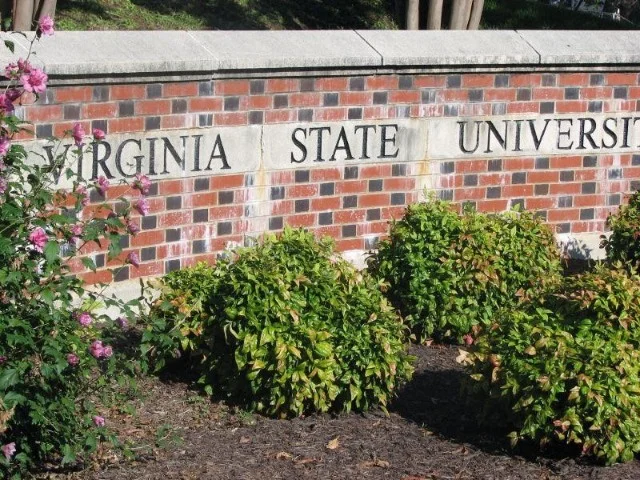
Virginia State University is a public, historically Black university (HBCU) known for its commitment to academic excellence, innovation, and its tradition of nurturing student success. Admissions prioritize academic potential and readiness, as well as evidence of a commitment to personal and professional development. The university seeks students who are eager to contribute to its rich history of leadership and innovation by engaging in active research and community-centered initiatives.
Applicants should highlight any history of leadership in high school, as well as their commitment to service. The university values applicants who are motivated and self-directed, so showcasing initiative through research projects, extracurricular roles, or relevant work experience is highly recommended. Demonstrating an understanding of the university's role as an engine for professional and social progress in the region is a key step in submitting a competitive and impactful application.
Virginia State University (VSU) runs an open-access admission policy. With a 89.1% acceptance rate, the focus is on getting qualified students in, not filtering them out.

Source: IPEDS & College Scorecard (Nov 2025).
The application deadline for Virginia State University is February 1 for Regular Decision applicants, with additional plans listed below. Admission decisions are typically released by April 1.
💡 The scholarship deadline (December 1, 2026) often falls before the regular admission deadline. Submit your application and FAFSA early to be considered for maximum aid.
Deadlines are verified from official institutional sources but may change each cycle. Always confirm final dates on the official website.
The average GPA of admitted students at VSU is 2.85. That makes admissions here moderately selective. Most admitted students carry a blend of A's, B's, and the occasional C.
A stronger SAT or ACT score can comfortably offset a GPA on the lower end of this range.
Most schools report GPA on a weighted or unweighted 4.0 scale differently. For an unweighted profile like this, students with AP/IB coursework typically carry a weighted GPA of 3.05–3.25.Assessment: Holistic review is critical for admission.
Recommended Strategy: Requires Contextual Factors (Leadership, hardship, or talent).
Where your GPA falls in this range shapes what the rest of your application needs to do:
Data verified via IPEDS, College Scorecard (Nov 2025) and the Common Data Set (CDS). Expert Review led by Sohaib Khan and Dr. Waseem.
Real-Time Sensitive Analysis — based on Virginia State University's verified institutional data
Adjust the sliders to see how every decimal point affects your outcome.
✅ Verified Data: Institutional records for 2026.
Calculated via College Portal's Human-Intelligence (HI) Methodology & Editorial Standards. Verified by Sohaib Ahmad Khan.
Standardized scores still matter here: aim for the middle 50% range of the 2026 admitted class below, and if VSU is test-optional, a high score submitted voluntarily still helps with merit scholarships.
The average SAT score of admitted students at Virginia State University is 917 on the 1600-point scale.
This average is on the lower end nationally, making a strong score here a genuine advantage.
If your score is below 800, retaking the SAT is strongly recommended to improve your chances at VSU. Retaking multiple times is completely normal. Most competitive applicants sit for it two or three times. There's no official limit on attempts.
| Section | Average | 25th Percentile | 75th Percentile |
|---|---|---|---|
| SAT Math | 445 | 380 | 510 |
| SAT Reading | 480 | 420 | 540 |
| SAT Composite | 917 | 800 | 1050 |
Below 800, you're behind most admitted students; at 1050 or above, you're ahead of 75% of them. (25th/75th percentile = the score below which that share of admitted students fall.)
View list of all colleges with average SAT score of 900
A 1050 SAT puts you ahead of most of VSU's admitted class, but admissions still weighs GPA, course rigor, and essays alongside it. A strong score opens the door; the rest of your profile decides what happens next.
The average ACT score at VSU is 17.
This average is on the lower end nationally, making a strong score here a real advantage.
| Section | Average | 25th Percentile | 75th Percentile |
|---|---|---|---|
| ACT Math | 16 | 14 | 17 |
| ACT Composite | 17 | 14 | 20 |
A 20 ACT puts you ahead of 75% of VSU's admitted students. That's a strong position, though the ACT is only one benchmark among several that admissions weighs.
Unlike the SAT, the ACT scores four separate sections: English, Math, Reading, and Science, each on a 1–36 scale. A noticeably weak section, especially Science at STEM-focused schools, stands out to reviewers, so it's worth checking your section breakdown for outliers before applying.
Your ACT score clears the first filter, but GPA, course rigor, extracurricular depth, recommendations, and essays are what carry an application the rest of the way at VSU.
VSU takes a broad view of applicants. Your energy is best spent proving readiness for coursework and maximizing your financial aid package.
VSU leads the Virginia College Affordability Network (VCAN), which provides free tuition to 275 Pell-eligible students who live within 25 miles of campus. This is a capped, specific-numbered program - not an open-ended entitlement - so eligible students should complete the VSU application, have a completed FAFSA on file (VSU's school code is 003764), and confirm Pell eligibility as early as possible rather than assuming a spot will be available closer to enrollment. Counselors should treat this as a genuine, time-sensitive opportunity specifically for students in VSU's immediate geographic vicinity (Petersburg and the surrounding 25-mile radius), and should not present it as available to any Pell-eligible VSU admit regardless of location.
VSU is one of the nation's 1890 Land-Grant institutions (a federal designation shared by a specific group of historically Black universities, distinct from more commonly known 1862 land-grant schools), which channels dedicated USDA research and extension funding into its College of Agriculture. Its aquaculture program at Randolph Farm produces research that has influenced farming practices as far afield as the Chesapeake Bay and Southeast Asia - a genuinely global research footprint for a program based at a mid-sized HBCU. Students interested in sustainable agriculture, aquaculture, or food security should name this land-grant designation and the specific Randolph Farm research record directly when discussing program fit, since it reflects real institutional research capacity, not just a general agriculture major.
VSU's College of Engineering and Technology houses a manufacturing engineering program that is one of only a handful offered at HBCUs nationwide, with graduates placed directly into positions at companies including Rolls-Royce and Honeywell. Given how many HBCUs have struggled to sustain robust STEM infrastructure under funding pressure, VSU's continued investment here is a genuine differentiator worth naming specifically - students should reference both the program's rarity among HBCUs and its named employer placements when discussing fit, rather than treating it as a generic engineering degree.
VSU uses a test-optional evaluation process (SAT/ACT not required for admission or merit scholarships, with emphasis placed on core coursework) and charges no application fee. Within its rolling admissions window, two dates matter operationally: applications received by March 1 are reviewed ahead of VSU's March 31 financial-aid priority deadline, and the college's overall application deadline is May 1, deliberately aligned with National College Decision Day. Students should be encouraged to apply well before March 1 specifically to maximize financial aid consideration timing, rather than waiting until closer to the May 1 final deadline and losing priority aid review.
VCAN's free-tuition benefit is not automatically available to every Pell-eligible VSU admit - it is capped at 275 students and restricted to those living within 25 miles of campus. Families outside that radius, or applying after available slots fill, should not assume they'll receive this specific award even if they meet the Pell-eligibility criterion; they should apply for and rely on VSU's broader financial aid package (need-based aid, merit scholarships) rather than counting on VCAN as a guaranteed outcome.
At $24,173/year against a $45,543 median graduate salary, VSU is worth weighing against your specific program and financial situation. The numbers below give you a real basis for that decision.
The average household income among admitted students is $59,100, with a graduate unemployment rate of 4.09%.
The sticker price is $24,173/year, but the average net price students actually pay, after Pell and federal grants, is closer to $14,553.
71% of students receive a Pell Grant and 75.7% take federal loans at VSU. File your FAFSA early and list VSU as a choice to be considered for both.
Median earnings 10 years after enrollment (roughly 4–6 years post-graduation) are $45,543. That's about 12% above the U.S. median graduate income.

These schools have lower average SAT or ACT scores than Virginia State University. If your SAT or ACT score is slightly lower, you'll be competitive for these schools.
| School | Location | SAT | ACT |
|---|---|---|---|
| Trinity College of Florida | Trinity, FL | 905 | 19 |
| Wesleyan College | Macon, GA | 905 | NA |
| Bennett College | Greensboro, NC | 890 | NA |
| University of Puerto Rico-Carolina | Carolina, PR | 904 | NA |
| Chamberlain University-Illinois | Addison, IL | 868 | 16 |

These schools have the same range of average SAT or ACT scores as Virginia State University. If your SAT or ACT score is competitive, you'll be competitive for these schools also.
| School | Location | SAT | ACT |
|---|---|---|---|
| University of Arkansas at Pine Bluff | Pine Bluff, AR | 916 | 16 |
| Bethune-Cookman University | Daytona Beach, FL | 913 | 17 |
| Morningside University | Sioux City, IA | 910 | 17 |
| Kentucky State University | Frankfort, KY | 910 | 17 |
| Southern University at New Orleans | New Orleans, LA | 910 | 16 |

These schools have higher average SAT or ACT scores than Virginia State University. If you improve your SAT or ACT score, you'll be competitive for these schools.
| School | Location | SAT | ACT |
|---|---|---|---|
| Alabama A & M University | Normal, AL | 947 | 17 |
| Alabama State University | Montgomery, AL | 977 | 18 |
| Baptist Health College Little Rock | Little Rock, AR | 980 | 20 |
| University of Bridgeport | Bridgeport, CT | 985 | NA |
| Delaware State University | Dover, DE | 984 | 24 |
Median earnings for Virginia State University graduates sit around $45,543 a year.
At about $24,173 a year, Virginia State University is on the more affordable end.
With 71.0% of Virginia State University students on a Pell Grant, need-based aid odds here are strong. An early FAFSA filing naming Virginia State University is the key move.
At 89.1%, Virginia State University's acceptance rate is on the more attainable end compared to top-tier selective schools.
Admitted students at Virginia State University average a 2.85 GPA.
Virginia State University doesn't publish a hard GPA floor, but landing at or above 2.55 keeps you in the typical applicant range; below it, lean on essays and recommendations.
Below 2.45, Virginia State University becomes a harder reach, though a strong test score, meaningful activities, and AP/IB coursework can still make a real case.
A strong SAT score matters at Virginia State University — aim above 917, ideally within the 800–1050 range admitted students typically fall in.
The application deadline for Virginia State University is February 1 for Regular Decision applicants. Admission decisions are released by April 1.
The application fee is 25. Fee waivers may be available. Check with admissions.
The scholarship/financial aid priority deadline is December 1, 2026. Submit FAFSA before then for maximum consideration.
Yes, transfers are common. Have transcripts, recommendation letters, and a solid personal statement ready to make your case.
Strong academics, a focused extracurricular profile, and standout essays move the needle most, along with a competitive SAT/ACT score where relevant.