
Public
Accredited · Western Association of Schools and Colleges Accrediting Commission for Community and Junior Colleges
Santa Clara, California
A complete at-a-glance picture of every metric that matters for your 2026 application
Mission College serves California's Silicon Valley from its 167-acre campus in Santa Clara, offering educational opportunities that reflect the region's technological and cultural diversity. Established in 1977 as part of the West Valley-Mission Community College District, the college has developed particular strengths in STEM fields, health sciences, and ethnic studies that address both workforce needs and social equity. Mission's 'Silicon Valley Center for Global Innovation and Entrepreneurship' supports technology education, while its Nursing Program maintains exceptional NCLEX pass rates.
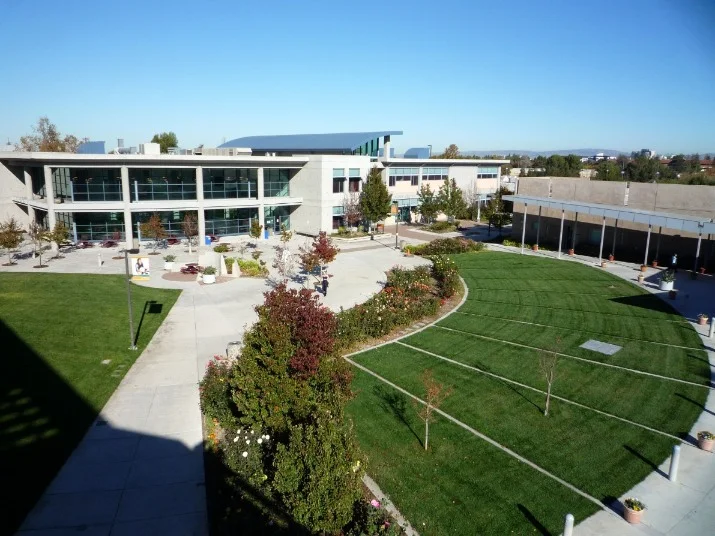
The campus features modern facilities including the Campus Center with its multicultural mural, the Innovation Center makerspace, and the Technology Center with specialized labs. Mission College serves a highly diverse student population through programs like 'Puente' for Latino students and 'AANAPISI' for Asian American and Pacific Islander students. The college's 'Mission Promise' provides free tuition for first-time students, while its strong transfer agreements with UC and CSU systems facilitate bachelor's degree attainment. Mission also hosts community events like the 'Festival of the Arts' and provides workforce training for major Silicon Valley employers through its Corporate Training division.
Mission College runs an open-access admission policy. With a 100% acceptance rate, the focus is on getting qualified students in, not filtering them out.

Slightly below-average GPA? A strong test score or clear leadership track record can still keep you competitive.
Source: IPEDS & College Scorecard (Nov 2025).
Mission College follows a Rolling Admissions policy, meaning applications are reviewed as they arrive and there is no single fixed deadline.
Mission College reviews applications continuously throughout the year. Seats and scholarships are awarded on a first-come, first-served basis, so applying early gives you a significant advantage for both admission and financial aid.
Deadlines are verified from official institutional sources but may change each cycle. Always confirm final dates on the official website.
Real-Time Sensitive Analysis — based on Mission College's verified institutional data
Adjust the sliders to see how every decimal point affects your outcome.
⚠️ Note: Predicting based on regional averages as this institution does not publicly report full score datasets.
Calculated via College Portal's Human-Intelligence (HI) Methodology & Editorial Standards. Verified by Sohaib Ahmad Khan.
Standardized scores still matter here: aim for the middle 50% range of the 2026 admitted class below, and if Mission College is test-optional, a high score submitted voluntarily still helps with merit scholarships.
Getting into Mission College is the easy part. What matters next is using placement testing, advising, and available resources to set up a strong first year.
Mission's 2+2 Program is structured explicitly around completing the first two years at Mission and the last two at a named transfer partner (UC Berkeley, UCLA, San Jose State, and others), with Transfer Admission Guarantees at six UC campuses. Pick your intended transfer destination early and build your course sequence around that specific TAG agreement rather than a generic "transfer someday" plan.
Mission College sits directly next to major tech employers including Apple and Google, a genuine geographic advantage for students in computer science, biotechnology, or business programs seeking internships or industry connections. Reference this specific proximity when reaching out to program advisors about internship or work-based learning opportunities, since it's a real structural feature of the campus, not marketing language.
International students apply through a separate International Student Application Form with a $100 fee, a bank/scholarship letter dated within 6 months, and passport documentation - distinct from the general open-admission process domestic students use. Assemble these time-sensitive financial documents early, since a stale bank letter can delay the entire application.
Mission's Intensive English Program is built specifically to let students improve English proficiency while working toward an associate/transfer degree, rather than treating language learning and degree progress as sequential. International or multilingual applicants should ask specifically about combining IIS coursework with their degree plan rather than assuming they must finish ESL before starting credit coursework.
Because Mission's general admission is fully open (100% acceptance rate) for domestic students, some applicants assume the same simplicity applies to the international application track. It doesn't - international students face a separate $100 fee, specific financial documentation with strict recency requirements (bank letters under 6 months old), and passport/visa paperwork that can derail an application if assembled late or generically.
At $15,047/year against a $50,936 median graduate salary, Mission College is worth weighing against your specific program and financial situation. The numbers below give you a real basis for that decision.
The average household income among admitted students is $99,200, with a graduate unemployment rate of 2.86%.
The sticker price is $15,047/year, but the average net price students actually pay, after Pell and federal grants, is closer to $5,198.
16.2% of students receive a Pell Grant and 0.4% take federal loans at Mission College. File your FAFSA early and list Mission College as a choice to be considered for both.
Median earnings 10 years after enrollment (roughly 4–6 years post-graduation) are $50,936. That's about 25% above the U.S. median graduate income.
Median graduate earnings at Mission College run about $50,936 a year.
At about $15,047 a year, Mission College is on the more affordable end.
Mission College's Pell Grant rate of 16.2% sits below the national average. Merit-based aid is worth checking regardless of income.
Mission College follows Rolling Admissions. Applications are reviewed year-round, so applying early is your best strategy.
Yes, transfers are common. Have transcripts, recommendation letters, and a solid personal statement ready to make your case.
Strong academics, a focused extracurricular profile, and standout essays move the needle most, along with a competitive SAT/ACT score where relevant.