
Non-Profit Private
Accredited · Higher Learning Commission
Denver, Colorado
87.3% Acceptance Rate
A complete at-a-glance picture of every metric that matters for your 2026 application
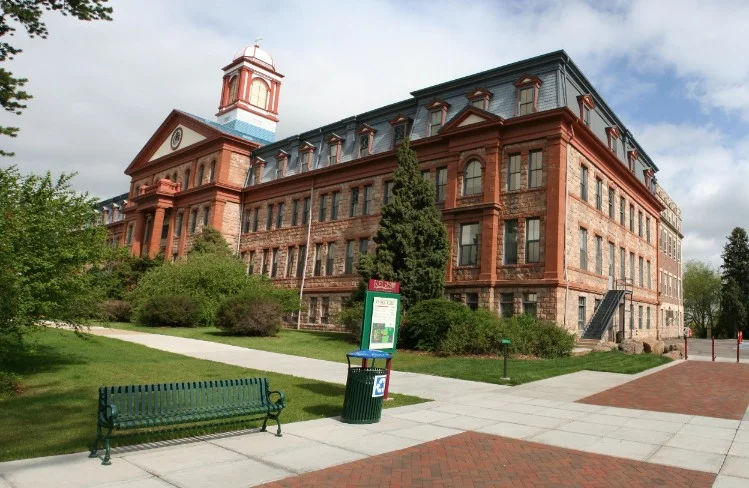
Regis University is a private, Catholic, Jesuit institution in Colorado that emphasizes values-based education and social justice. Admissions are holistic, evaluating students on their capacity for critical inquiry and their commitment to serving others. Applicants should highlight their interest in ethical leadership, service-learning, and their readiness to contribute to a campus community that bridges the gap between the liberal arts and professional practice.
Admission at Regis University is inclusive by design. 87.3% of applicants who meet basic eligibility are accepted.

Source: IPEDS & College Scorecard (Nov 2025).
Regis University follows a Rolling Admissions policy, meaning applications are reviewed as they arrive and there is no single fixed deadline, though the priority deadline of December 1 is recommended for the best chances of admission and financial aid.
RU reviews applications continuously throughout the year. Seats and scholarships are awarded on a first-come, first-served basis, so applying early gives you a significant advantage for both admission and financial aid.
💡 The scholarship deadline (December 1, 2026) often falls before the regular admission deadline. Submit your application and FAFSA early to be considered for maximum aid.
Deadlines are verified from official institutional sources but may change each cycle. Always confirm final dates on the official website.
The average GPA of admitted students at RU is 3.68. That makes admissions here highly selective. Most admitted students carry mostly A's with the occasional B.
Between 3.38 and 3.68? A strong standardized test score is worth prioritizing.
Note the scale: this figure reflects an unweighted 4.0 GPA. Add AP or IB coursework and the equivalent weighted GPA usually lands around 3.88–4.08.Assessment: Selective, with solid academic performance as the expectation.
Recommended Strategy: A clear, defined strength in one activity or research area matters more than breadth.
This range is a rough map. Where you land determines what else needs to carry weight in your application.:
Data verified via IPEDS, College Scorecard (Nov 2025) and the Common Data Set (CDS). Expert Review led by Sohaib Khan and Dr. Waseem.
Built from Regis University's own verified admissions data — adjust the sliders below
Adjust the sliders to see how every decimal point affects your outcome.
✅ Verified Data: Institutional records for 2026.
Calculated via College Portal's Human-Intelligence (HI) Methodology & Editorial Standards. Verified by Sohaib Ahmad Khan.
Scores aren't just a formality at RU. Landing within or above the 2026 admitted class's middle 50% keeps you fully competitive, even where submission is optional.
Admitted students at Regis University average a 1120 SAT (out of 1600).

A 1120 average leaves meaningful room above it for a competitive application.
Scored under 1080? A retake is worth it at RU. Two or three sittings is standard for competitive applicants, and there's no cap on how many times you can test.
| Section | Average | 25th Percentile | 75th Percentile |
|---|---|---|---|
| SAT Math | - | - | - |
| SAT Reading | - | - | - |
| SAT Composite | 1120 | 1080 | 1150 |
A score under 1080 puts you in the lower quarter of admits; 1150+ puts you ahead of three-quarters of the admitted class. (These percentiles mark where a given share of the admitted class scored at or below.)
View list of all colleges with average SAT score of 1100
At 1150, your SAT is squarely in RU's favor. That said, admissions staff read the full file. GPA, activities, and essays still carry real weight even with a strong score in hand.
Getting into RU isn't the hard part. Building a solid academic foundation and securing aid early is where the real strategy lives.
Regis offers newly matriculated freshmen Guaranteed Admission into the Traditional BSN if they maintain a 3.25 cumulative GPA AND a 3.25 science GPA through four full-time semesters at Regis College - well above the 2.75/2.75 floor used for standard competitive BSN applicants, with explicitly "no appeals process" if you fall short of Guaranteed Admission. If your GPA is likely to land between 2.75 and 3.25, plan from day one to apply through the standard competitive process rather than assuming the Guaranteed Admission pathway is a formality, since Regis treats these as two entirely separate tracks with different risk profiles.
Regis's own FAQ states the CHOICE program (designed for current healthcare workers) receives 80-120 applications annually but accepts only 24 students each in the fall and spring terms (48 total per year) - meaningfully more competitive than the raw acceptance-rate numbers for Regis overall might suggest. If you're currently working in healthcare and considering CHOICE, strengthen your application with your professional resume and two strong recommendation forms specifically, since these are explicitly weighted alongside GPA in a pool where roughly 40-60% of applicants are turned away each cycle.
At least one detailed student account describes a cohort where "200 students" were reportedly admitted into the direct-admission nursing pathway against "less than 100 spots," with the account describing rigorous freshman/sophomore science coursework functioning to narrow the pool down to available capacity. Confirm current-year cohort sizing and expected pre-nursing attrition directly with Loretto Heights School of Nursing advising before treating "guaranteed admission" as a promise of an uncontested path through to junior-year major coursework - treat freshman/sophomore science courses as the real competitive filter, not a formality.
Regis's application policy explicitly requires "at least three of the four prerequisite science courses including labs" completed by the application deadline, with the fourth allowed to be in-progress - but all four must be finished before the program actually starts. Sequence your science coursework so three of the four land ahead of your specific application deadline (which varies by BSN track: CHOICE, Accelerated, Traditional each have their own dates), since submitting with only one or two complete could disqualify an otherwise strong application.
Because Regis markets itself around Jesuit values of "cura personalis" (care for the whole person) and a supportive small-university feel, applicants sometimes underweight how genuinely competitive and attrition-heavy the path to a nursing degree can be - one detailed student account describes freshman/sophomore science courses being deliberately structured to reduce an over-admitted cohort down to available clinical capacity, a pattern worth directly verifying with current students or the nursing department rather than assuming "guaranteed admission" removes all future risk.
At $54,889/year against a $72,105 median graduate salary, RU is worth weighing against your specific program and financial situation. The numbers below give you a real basis for that decision.
Admitted students' families report a median household income around $74,300, and graduates see a 2.85% unemployment rate.
Listed tuition runs $54,889/year at RU. Factor in Pell and federal grant aid, and most students land typically much lower.
At RU, 26.2% receive a Pell Grant and 45.6% carry federal loans. Filing FAFSA early and naming RU on it improves your shot at both.
Ten years out from enrollment, RU graduates report a median income of $72,105, about 78% above the U.S. median graduate income.

These schools have lower average SAT or ACT scores than Regis University. If your SAT or ACT score is slightly lower, you'll be competitive for these schools.
| School | Location | SAT | ACT |
|---|---|---|---|
| Auburn University at Montgomery | Montgomery, AL | 1090 | 21 |
| Spring Hill College | Mobile, AL | 1090 | 22 |
| Troy University | Troy, AL | 1086 | 22 |
| Grand Canyon University | Phoenix, AZ | 1095 | 22 |
| University of the Ozarks | Clarksville, AR | 1088 | 21 |
| Pacific Union College | Angwin, CA | 1093 | 22 |
| Fort Lewis College | Durango, CO | 1084 | 20 |
| Colorado Mesa University | Grand Junction, CO | 1070 | 23 |
| University of Northern Colorado | Greeley, CO | 1077 | 22 |
| Central Connecticut State University | New Britain, CT | 1091 | 24 |

These schools have the same range of average SAT or ACT scores as Regis University. If your SAT or ACT score is competitive, you'll be competitive for these schools also.
| School | Location | SAT | ACT |
|---|---|---|---|
| University of South Alabama | Mobile, AL | 1119 | 23 |
| Tuskegee University | Tuskegee, AL | 1121 | 22 |
| Arkansas State University | Jonesboro, AR | 1119 | 22 |
| University of Central Arkansas | Conway, AR | 1117 | 22 |
| University of La Verne | La Verne, CA | 1116 | 22 |

These schools have higher average SAT or ACT scores than Regis University. If you improve your SAT or ACT score, you'll be competitive for these schools.
| School | Location | SAT | ACT |
|---|---|---|---|
| Birmingham-Southern College | Birmingham, AL | 1197 | 24 |
| University of Arkansas | Fayetteville, AR | 1174 | 25 |
| Harding University | Searcy, AR | 1187 | 25 |
| Azusa Pacific University | Azusa, CA | 1155 | 22 |
| Dominican University of California | San Rafael, CA | 1194 | 26 |
Regis University graduates earn a moderate median salary of $72,105/year, with some variation by field.
Tuition at Regis University runs high, at roughly $54,889+/year, so financial aid planning matters.
26.2% of Regis University students get a Pell Grant. Your odds depend mostly on household income, and filing FAFSA early still helps maximize what you're offered.
Regis University's acceptance rate is 87.3%, comparatively higher than most selective universities. Admission is more attainable here.
The average GPA of admitted Regis University students is 3.68, reflecting a competitive applicant pool.
There's no strict cutoff, but a GPA at or above 3.38 puts you in the standard applicant pool at Regis University. Below that, your essays and recommendations need to work harder to provide context.
A GPA of 3.28 or below makes admission tougher at Regis University, but strong test scores, activities, and essays, plus AP/IB coursework, can still keep you in contention.
Regis University weighs the SAT heavily. Scoring above 1120, and within the 1080–1150 range, keeps you competitive.
Regis University's deadline is December 1. Rolling Admissions applies too, so earlier is always better.
For priority financial aid consideration, get your FAFSA in before December 1, 2026. That's Regis University's scholarship priority date.
Transferring in is a well-trodden path here. Line up your transcripts, recommendations, and a strong personal statement before applying.
The biggest levers are academic performance, a clear extracurricular focus, and essays that stand out, plus a solid test score where the school considers one.