
Non-Profit Private
Accredited · New England Commission on Higher Education
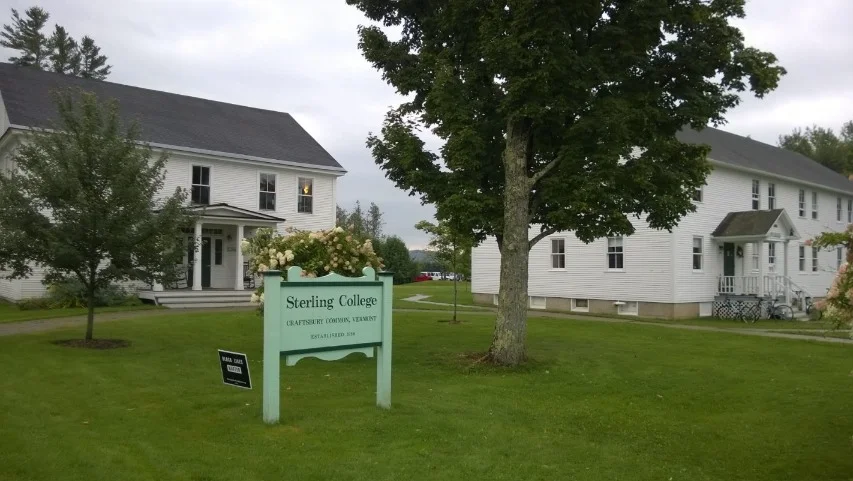
Craftsbury Common, Vermont
92.3% Acceptance Rate
A complete at-a-glance picture of every metric that matters for your 2026 application
Sterling College (VT) is an experiential liberal arts college focused on environmental stewardship. Admissions prioritize students who demonstrate a genuine passion for environmental work, outdoor leadership, and sustainability. A hands-on, community-based approach to learning is essential for candidate success.
Sterling College runs an open-access admission policy. With a 92.3% acceptance rate, the focus is on getting qualified students in, not filtering them out.

Source: IPEDS & College Scorecard (Nov 2025).
Sterling College follows a Rolling Admissions policy, meaning applications are reviewed as they arrive and there is no single fixed deadline.
Sterling College reviews applications continuously throughout the year. Seats and scholarships are awarded on a first-come, first-served basis, so applying early gives you a significant advantage for both admission and financial aid.
💡 The scholarship deadline (2026/02/01 (Merit scholarship priority)) often falls before the regular admission deadline. Submit your application and FAFSA early to be considered for maximum aid.
Deadlines are verified from official institutional sources but may change each cycle. Always confirm final dates on the official website.
The average GPA of admitted students at Sterling College is 3.1. That makes admissions here competitive, but not extremely selective. Most admitted students carry a mix of A's and B's.
In the 2.80–3.1 range, a high SAT or ACT score still carries real weight.
Most schools report GPA on a weighted or unweighted 4.0 scale differently. For an unweighted profile like this, students with AP/IB coursework typically carry a weighted GPA of 3.30–3.50.Assessment: Holistic review is critical for admission.
Recommended Strategy: Requires Contextual Factors (Leadership, hardship, or talent).
Where your GPA falls in this range shapes what the rest of your application needs to do:
Data verified via IPEDS, College Scorecard (Nov 2025) and the Common Data Set (CDS). Expert Review led by Sohaib Khan and Dr. Waseem.
Real-Time Sensitive Analysis — based on Sterling College's verified institutional data
Adjust the sliders to see how every decimal point affects your outcome.
⚠️ Note: Predicting based on regional averages as this institution does not publicly report full score datasets.
Calculated via College Portal's Human-Intelligence (HI) Methodology & Editorial Standards. Verified by Sohaib Ahmad Khan.
Standardized scores still matter here: aim for the middle 50% range of the 2026 admitted class below, and if Sterling College is test-optional, a high score submitted voluntarily still helps with merit scholarships.
Sterling College's open-access model means the real strategic decisions happen after enrollment: course planning, advising, and whether to transfer later.
Sterling College (Craftsbury Common, VT) concluded its Associate and Bachelor's degree programs after Spring 2026 commencement and is no longer enrolling new degree-seeking students. Redirect any student interested in this profile to a different institution.
Sterling arranged formal teach-out agreements with College of the Atlantic (Bar Harbor, ME), Champlain College, and Community College of Vermont for students in similar ecological/sustainable-agriculture coursework. Point interested students to these three first.
College of the Atlantic now serves as Sterling's permanent academic records repository. Anyone needing a Sterling transcript should be directed there rather than to Sterling's own (defunct) registrar.
Students drawn to Sterling's model - a tiny work-college built around a working farm and ecological studies - should be pointed to other work colleges with a similar hands-on, land-based focus, since no single school directly replaces it.
Sterling College (Vermont) is closed. Its board announced closure in November 2025 citing enrollment and financial decline - fewer than 40 students in its final fall semester - held its final commencement in May 2026, and wound down afterward. Treat any admissions data, acceptance rates, or essay prompts found online under "Sterling College" as stale unless clearly labeled as the separate, still-operating Sterling College in Sterling, Kansas.
At $52,300/year against a $30,573 median graduate salary, Sterling College is worth weighing against your specific program and financial situation. The numbers below give you a real basis for that decision.
The average household income among admitted students is $65,800, with a graduate unemployment rate of 2.97%.
The sticker price is $52,300/year, but the average net price students actually pay, after Pell and federal grants, is typically much lower.
34.7% of students receive a Pell Grant and 35.6% take federal loans at Sterling College. File your FAFSA early and list Sterling College as a choice to be considered for both.
Median earnings 10 years after enrollment (roughly 4–6 years post-graduation) are $30,573. That's somewhat below the U.S. median graduate income of $40,595.
Median earnings for Sterling College graduates sit around $30,573 a year.
At about $52,300 a year, Sterling College's cost is on the higher end; look closely at aid options.
About 34.7% receive a Pell Grant at Sterling College. The odds are moderate and largely income-dependent, but an early FAFSA filing still helps.
At 92.3%, Sterling College's acceptance rate is on the more attainable end compared to top-tier selective schools.
Admitted students at Sterling College average a 3.1 GPA.
Sterling College doesn't publish a hard GPA floor, but landing at or above 2.8 keeps you in the typical applicant range; below it, lean on essays and recommendations.
Below 2.7, Sterling College becomes a harder reach, though a strong test score, meaningful activities, and AP/IB coursework can still make a real case.
Sterling College follows Rolling Admissions. Applications are reviewed year-round, so applying early is your best strategy.
The scholarship/financial aid priority deadline is 2026/02/01 (Merit scholarship priority). Submit FAFSA before then for maximum consideration.
Yes, transfers are common. Have transcripts, recommendation letters, and a solid personal statement ready to make your case.
Strong academics, a focused extracurricular profile, and standout essays move the needle most, along with a competitive SAT/ACT score where relevant.