
Non-Profit Private
Accredited · Western Association of Schools and Colleges Senior Colleges and University Commission
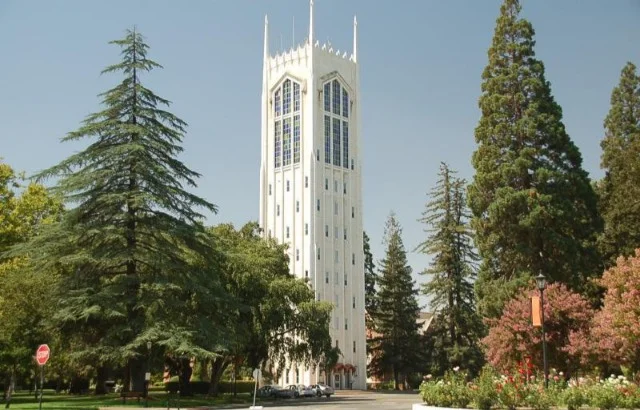
Stockton, California
94.9% Acceptance Rate
A complete at-a-glance picture of every metric that matters for your 2026 application
University of the Pacific is a private, comprehensive university in California known for its focus on professional programs, undergraduate research, and personalized mentorship. Admissions are holistic and competitive, seeking students who display high intellectual potential, character, and a commitment to their chosen field of study. The university values applicants who show they can engage in rigorous inquiry and professional training within a values-centered, student-focused academic community.
Successful applicants should emphasize their participation in academic and extracurricular organizations that showcase their leadership or initiative. Because the university encourages a blend of theory and practice; particularly in areas like pharmacy, law, and business; providing evidence of projects or roles that demonstrate a student's ambition will strengthen the application significantly. A clear articulation of how the student intends to use a comprehensive liberal arts foundation to achieve their specific career aspirations is essential for a competitive application.
Admission at University of the Pacific is inclusive by design. 94.9% of applicants who meet basic eligibility are accepted.

Source: IPEDS & College Scorecard (Nov 2025).
Mark October 1 for University of the Pacific (Spring — other plans are listed below).
💡 The scholarship deadline (November 15, 2026) often falls before the regular admission deadline. Submit your application and FAFSA early to be considered for maximum aid.
Deadlines are verified from official institutional sources but may change each cycle. Always confirm final dates on the official website.
The average GPA of admitted students at University of the Pacific is 3.58. That makes admissions here highly selective. Most admitted students carry mostly A's with the occasional B.
Between 3.28 and 3.58? A strong standardized test score is worth prioritizing.
Note the scale: this figure reflects an unweighted 4.0 GPA. Add AP or IB coursework and the equivalent weighted GPA usually lands around 3.78–3.98.Assessment: Selective, with solid academic performance as the expectation.
Recommended Strategy: A clear, defined strength in one activity or research area matters more than breadth.
This range is a rough map. Where you land determines what else needs to carry weight in your application.:
Data verified via IPEDS, College Scorecard (Nov 2025) and the Common Data Set (CDS). Expert Review led by Sohaib Khan and Dr. Waseem.
Built from University of the Pacific's own verified admissions data — adjust the sliders below
Adjust the sliders to see how every decimal point affects your outcome.
✅ Verified Data: Institutional records for 2026.
Calculated via College Portal's Human-Intelligence (HI) Methodology & Editorial Standards. Verified by Sohaib Ahmad Khan.
Scores aren't just a formality at University of the Pacific. Landing within or above the 2026 admitted class's middle 50% keeps you fully competitive, even where submission is optional.
Admitted students at University of the Pacific average a 1303 SAT (out of 1600).

A 1303 average is a respectable, above-average benchmark nationally.
Scored under 1160? A retake is worth it at University of the Pacific. Two or three sittings is standard for competitive applicants, and there's no cap on how many times you can test.
| Section | Average | 25th Percentile | 75th Percentile |
|---|---|---|---|
| SAT Math | 655 | 580 | 730 |
| SAT Reading | 635 | 580 | 690 |
| SAT Composite | 1303 | 1160 | 1420 |
A score under 1160 puts you in the lower quarter of admits; 1420+ puts you ahead of three-quarters of the admitted class. (These percentiles mark where a given share of the admitted class scored at or below.)
View list of all colleges with average SAT score of 1300
At 1400, your SAT is squarely in University of the Pacific's favor. That said, admissions staff read the full file. GPA, activities, and essays still carry real weight even with a strong score in hand.
University of the Pacific's admitted students average an ACT of 27.
An average of 27 is a respectable, above-average national benchmark.
| Section | Average | 25th Percentile | 75th Percentile |
|---|---|---|---|
| ACT Math | 27 | 23 | 31 |
| ACT English | 27 | 22 | 32 |
| ACT Composite | 27 | 23 | 31 |
At 31, you're in the top quarter of University of the Pacific's admitted class by ACT score. That's a real advantage, but admissions still reads GPA, essays, and activities alongside it.
The ACT's four sections, English, Math, Reading, and Science, are each scored independently on a 1–36 scale, and admissions staff do notice a lopsided breakdown. If one section trails the others significantly, that's worth addressing before you apply, particularly for STEM programs where Science carries extra weight.
Beyond the number itself, University of the Pacific weighs your transcript rigor, activities, recommendations, and essays just as heavily. The ACT opens the door, and the rest of your file decides what happens next.
Getting into University of the Pacific is the easy part. What matters next is using placement testing, advising, and available resources to set up a strong first year.
Pacific's Common App Direct Admission option genuinely lets qualifying applicants skip the personal essay, counselor recommendations, and teacher evaluations - but the university's own materials explicitly list exclusions: pre-dental, dental hygiene, and pre-pharmacy majors are not eligible for Direct Admission, nor are any music majors except Music Industry Studies (MIS) specifically. If you're aiming for one of Pacific's flagship professional health-science or music pathways, don't assume the celebrated "skip the essay" option applies to you - confirm your specific intended major's eligibility status directly with admissions before building an application strategy around Direct Admission, since applying under this assumption to an excluded major means submitting an incomplete application for your actual target program.
Pacific's own DDS admissions materials state directly that more than 2,700 individuals applied for 140 positions in a recent cycle, with competitive DAT scores this cycle running 22 and higher (scores below 20 are explicitly flagged as warranting a retake). If you're a Pacific undergraduate in a pre-dental track hoping the Dugoni School's in-house reputation gives you an automatic edge, understand this competitive reality applies broadly - the Admissions Committee reviews only your most recent DAT score (not your best historical attempt), and gives admission preference to applicants who submit final DAT scores no later than November of the application cycle. Structure your DAT testing timeline explicitly around this November preference deadline rather than treating it as a soft suggestion, since testing later in the cycle puts you at a genuine, stated disadvantage relative to on-time applicants.
Because pre-pharmacy is explicitly excluded from Pacific's Common App Direct Admission streamlined pathway, pre-pharmacy applicants face the full traditional application process - personal essay, counselor recommendation, teacher evaluations - that Direct Admission-eligible majors bypass entirely. Given that current pre-pharmacy students describe the eventual PharmD application process itself (a separate, later application layered on top of your undergraduate admission) as involving multiple applications, essays, and multi-stage interviews, treat your initial undergraduate pre-pharmacy application with the same seriousness as the harder professional-school application that follows years later - this is not a track where you can coast through undergraduate admission and suddenly ramp up effort only at the PharmD application stage.
Pacific's DDS admissions requirements specify a minimum of 40 hours of dental shadowing completed specifically with a general dentist - critically, dental assisting experience does not count toward this shadowing requirement, though it can be separately listed elsewhere on the application under "Dental Experience." Additionally, Pacific's own FAQ explicitly recommends starting your search for letters of recommendation at least three months in advance of submission, with a specific formula: two letters from biomedical science professors (biology, chemistry, physics, biochemistry) plus one character-focused letter from someone who knows you personally. If dental school is even a possibility, start logging shadowing hours with a general dentist specifically (not just any dental professional) as early as your first year of undergraduate study, since accumulating 40 quality hours takes genuine calendar time you don't want to compress into a few frantic months before applying.
Applicants sometimes assume that reapplying to Pacific's Dugoni School of Dentistry after a prior unsuccessful cycle signals a weaker profile to the Admissions Committee - but Pacific's own FAQ explicitly states indicating reapplicant status will not negatively impact your admissions status for the new cycle, and given the program's own acknowledgment that competitive applicants may need to apply several times before securing an interview invitation given the sheer size of the applicant pool (2,700+ for ~140 seats), a strong candidate should not interpret a first-cycle rejection as a signal to abandon Pacific specifically, provided they've genuinely strengthened their DAT score, GPA, or experience hours before reapplying rather than resubmitting an unchanged application.
At $68,173/year against a $78,445 median graduate salary, University of the Pacific is worth weighing against your specific program and financial situation. The numbers below give you a real basis for that decision.
Admitted students' families report a median household income around $72,600, and graduates see a 4.27% unemployment rate.
Listed tuition runs $68,173/year at University of the Pacific. Factor in Pell and federal grant aid, and most students land typically much lower.
At University of the Pacific, 34.3% receive a Pell Grant and 42.7% carry federal loans. Filing FAFSA early and naming University of the Pacific on it improves your shot at both.
Ten years out from enrollment, University of the Pacific graduates report a median income of $78,445, about 93% above the U.S. median graduate income.

These schools have lower average SAT or ACT scores than University of the Pacific. If your SAT or ACT score is slightly lower, you'll be competitive for these schools.
| School | Location | SAT | ACT |
|---|---|---|---|
| The University of Alabama | Tuscaloosa, AL | 1287 | 28 |
| University of Arizona | Tucson, AZ | 1261 | 26 |
| Embry-Riddle Aeronautical University-Prescott | Prescott, AZ | 1256 | 27 |
| Biola University | La Mirada, CA | 1258 | 27 |
| Point Loma Nazarene University | San Diego, CA | 1278 | 26 |
| Thomas Aquinas College | Santa Paula, CA | 1277 | 29 |
| United States Coast Guard Academy | New London, CT | 1290 | 28 |
| University of Central Florida | Orlando, FL | 1277 | 27 |
| Eckerd College | Saint Petersburg, FL | 1256 | 27 |
| Embry-Riddle Aeronautical University-Daytona Beach | Daytona Beach, FL | 1256 | 27 |

These schools have the same range of average SAT or ACT scores as University of the Pacific. If your SAT or ACT score is competitive, you'll be competitive for these schools also.
| School | Location | SAT | ACT |
|---|---|---|---|
| University of San Francisco | San Francisco, CA | 1313 | 29 |
| University of Delaware | Newark, DE | 1297 | 29 |
| Rollins College | Winter Park, FL | 1304 | 29 |
| Agnes Scott College | Decatur, GA | 1296 | 29 |
| University of Georgia | Athens, GA | 1301 | 29 |

These schools have higher average SAT or ACT scores than University of the Pacific. If you improve your SAT or ACT score, you'll be competitive for these schools.
| School | Location | SAT | ACT |
|---|---|---|---|
| Hendrix College | Conway, AR | 1336 | 29 |
| Chapman University | Orange, CA | 1353 | 30 |
| Pepperdine University | Malibu, CA | 1367 | 29 |
| Westmont College | Santa Barbara, CA | 1367 | 32 |
| University of Colorado Boulder | Boulder, CO | 1353 | 31 |
University of the Pacific graduates earn a moderate median salary of $78,445/year, with some variation by field.
Tuition at University of the Pacific runs high, at roughly $68,173+/year, so financial aid planning matters.
34.3% of University of the Pacific students get a Pell Grant. Your odds depend mostly on household income, and filing FAFSA early still helps maximize what you're offered.
University of the Pacific's acceptance rate is 94.9%, comparatively higher than most selective universities. Admission is more attainable here.
The average GPA of admitted University of the Pacific students is 3.58, reflecting a competitive applicant pool.
There's no strict cutoff, but a GPA at or above 3.28 puts you in the standard applicant pool at University of the Pacific. Below that, your essays and recommendations need to work harder to provide context.
A GPA of 3.18 or below makes admission tougher at University of the Pacific, but strong test scores, activities, and essays, plus AP/IB coursework, can still keep you in contention.
University of the Pacific weighs the SAT heavily. Scoring above 1303, and within the 1160–1420 range, keeps you competitive.
University of the Pacific's deadline is October 1 (Spring).
For priority financial aid consideration, get your FAFSA in before November 15, 2026. That's University of the Pacific's scholarship priority date.
Transferring in is a well-trodden path here. Line up your transcripts, recommendations, and a strong personal statement before applying.
The biggest levers are academic performance, a clear extracurricular focus, and essays that stand out, plus a solid test score where the school considers one.