
Non-Profit Private
Accredited · Western Association of Schools and Colleges Senior Colleges and University Commission
San Francisco, California
50.8% Acceptance Rate
A complete at-a-glance picture of every metric that matters for your 2026 application
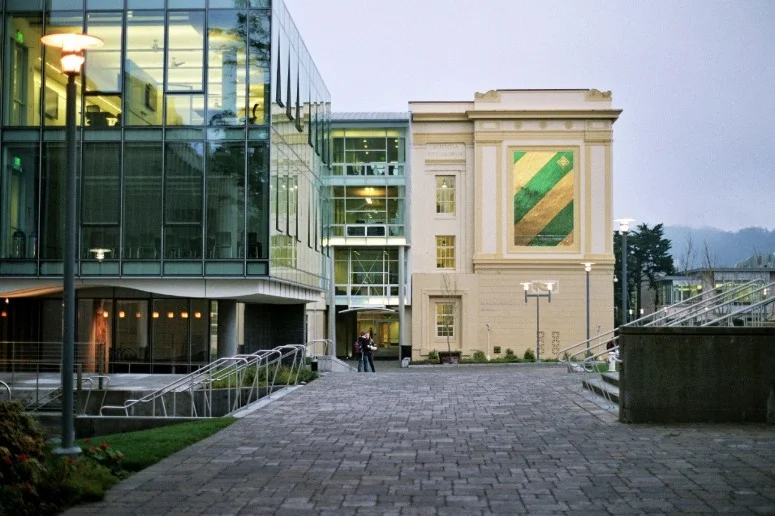
University of San Francisco, founded in 1855, is a private Jesuit university with a stunning hilltop campus overlooking the city. Ranked among national universities, USF is particularly strong in nursing, business, and environmental science. The campus blends historic architecture with modern facilities like the cutting-edge Downtown Campus for professional programs.
USF embodies Jesuit values of social justice through its community engagement programs and diverse student body. The university's San Francisco location provides unparalleled internship and career opportunities in tech, finance, and nonprofit sectors.
University of San Francisco is moderately selective. 50.8% of applicants are admitted, with room for a well-rounded, if imperfect, transcript.

Source: IPEDS & College Scorecard (Nov 2025).
The application deadline for University of San Francisco is November 1 for Early Action applicants, with additional plans listed below. Admission decisions are typically released by December 15.
💡 The scholarship deadline (November 1, 2026) often falls before the regular admission deadline. Submit your application and FAFSA early to be considered for maximum aid.
Deadlines are verified from official institutional sources but may change each cycle. Always confirm final dates on the official website.
The average GPA of admitted students at University of San Francisco is 3.57. That makes admissions here highly selective. Most admitted students carry mostly A's with the occasional B.
Between 3.27 and 3.57? A strong standardized test score is worth prioritizing.
Most schools report GPA on a weighted or unweighted 4.0 scale differently. For an unweighted profile like this, students with AP/IB coursework typically carry a weighted GPA of 3.77–3.97.Assessment: Selective; solid academic performance is expected.
Recommended Strategy: Focus on a Strong 'Spike' in extracurriculars or research.
Where your GPA falls in this range shapes what the rest of your application needs to do:
Data verified via IPEDS, College Scorecard (Nov 2025) and the Common Data Set (CDS). Expert Review led by Sohaib Khan and Dr. Waseem.
Real-Time Sensitive Analysis — based on University of San Francisco's verified institutional data
Adjust the sliders to see how every decimal point affects your outcome.
✅ Verified Data: Institutional records for 2026.
Calculated via College Portal's Human-Intelligence (HI) Methodology & Editorial Standards. Verified by Sohaib Ahmad Khan.
Standardized scores still matter here: aim for the middle 50% range of the 2026 admitted class below, and if University of San Francisco is test-optional, a high score submitted voluntarily still helps with merit scholarships.
The average SAT score of admitted students at University of San Francisco is 1313 on the 1600-point scale.

This average is solidly above the national mean, without being in elite-tier territory.
If your score is below 1210, retaking the SAT is strongly recommended to improve your chances at University of San Francisco. Retaking multiple times is completely normal. Most competitive applicants sit for it two or three times. There's no official limit on attempts.
| Section | Average | 25th Percentile | 75th Percentile |
|---|---|---|---|
| SAT Math | 650 | 600 | 700 |
| SAT Reading | 650 | 610 | 690 |
| SAT Composite | 1313 | 1210 | 1390 |
Below 1210, you're behind most admitted students; at 1390 or above, you're ahead of 75% of them. (25th/75th percentile = the score below which that share of admitted students fall.)
View list of all colleges with average SAT score of 1300
A 1400 SAT puts you ahead of most of University of San Francisco's admitted class, but admissions still weighs GPA, course rigor, and essays alongside it. A strong score opens the door; the rest of your profile decides what happens next.
The average ACT score at University of San Francisco is 29.
This average is solidly above the national mean without being elite-tier.
| Section | Average | 25th Percentile | 75th Percentile |
|---|---|---|---|
| ACT Math | 26 | 24 | 28 |
| ACT English | 29 | 25 | 33 |
| ACT Composite | 29 | 26 | 31 |
A 31 ACT puts you ahead of 75% of University of San Francisco's admitted students. That's a strong position, though the ACT is only one benchmark among several that admissions weighs.
Unlike the SAT, the ACT scores four separate sections: English, Math, Reading, and Science, each on a 1–36 scale. A noticeably weak section, especially Science at STEM-focused schools, stands out to reviewers, so it's worth checking your section breakdown for outliers before applying.
Your ACT score clears the first filter, but GPA, course rigor, extracurricular depth, recommendations, and essays are what carry an application the rest of the way at University of San Francisco.
University of San Francisco takes a broad view of applicants. Your energy is best spent proving readiness for coursework and maximizing your financial aid package.
USF is unusual among selective universities in explicitly stating that nursing applicants do not receive priority for submitting early: "We review all applications at the deadline. You do not get priority for submitting early, so we recommend carefully working through your application rather than rushing." All nursing applicants are reviewed together at the deadline, which is January 15 for fall entry (same as Regular Decision). The deadline for spring entry is November 1. The nursing program limits intake to approximately 100 students per entering class across the San Francisco campus. Applicants with a grade below a C average in chemistry, biology, physics, physiology, Algebra II, or any AP/honors science course cannot be admitted - a hard academic bar that distinguishes nursing from USF's general admissions, which is test-optional and holistic. All admitted nursing students must also complete a background check and ten-panel drug screening before beginning clinical coursework.
Nursing applicants must submit a required short answer (200 words maximum) beyond the Common App personal statement: "What will be your responsibility to others as a Jesuit-educated, BSN professional registered nurse?" This essay must be entirely distinct from the personal statement - USF explicitly states not to paste or excerpt from the main essay. The response is short enough that generic language about helping people is immediately visible as a non-answer. The strongest responses name Jesuit values by their specific terms - cura personalis (care for the whole person), accompaniment, justice, human dignity - and then connect them to a real and specific moment: a patient encounter, a family illness, volunteering at a clinic, a healthcare access barrier witnessed. At 200 words, an opening sentence that doesn't immediately establish the specific responsibility the student intends to articulate is wasted space.
For all applicants who are not applying to the nursing program, USF requires no supplemental essay beyond the Common App personal statement. This is structurally significant: it means the personal statement, the activities list, and the transcript are the entire written record on which USF makes its holistic decision. USF's "What We Look For" page explicitly asks applicants to address community involvement, what making the world a better place means to them, and how they will contribute to the Jesuit mission of social responsibility. These are not supplemental prompts - they are the framing through which admissions reads the personal statement USF receives. Non-nursing applicants who write a generic personal statement without connecting their story to service, community, or Jesuit-aligned values are submitting a file that is technically complete but thematically misaligned with how USF reviews it.
USF offers Early Decision I (binding, November 1, for students whose first choice is USF), Early Action (non-binding, November 1), and Early Decision II and Regular Decision (both January 15). Test-optional policy applies to all pathways - and USF superscores both the ACT and SAT if scores are submitted. For the fall 2025 entering nursing class, 84% of admitted students were admitted without test scores, making the nursing-specific short answer and chemistry prerequisite the actual differentiators in that pool. For non-nursing applicants, the typical USF overall acceptance rate of approximately 51% masks significant variation by program - nursing is substantially more selective. Students who are applying without test scores should know that USF explicitly places more weight on the short answer question and academic profile when scores are withheld, making the activities list and transcript especially important to complete thoroughly.
USF's nursing program requires completion of chemistry prior to applying - and then either biology or physics as a second lab science. Students who have taken only biology and no chemistry, or who have below-C grades in any science listed above, cannot be admitted to nursing regardless of their overall USF admission status. This distinction matters because some students apply to USF nursing as a general fallback school, assuming that if they can be admitted to USF generally, nursing will follow. It will not. The nursing application is evaluated separately with its own science prerequisite checklist, its own 200-word short answer, and its own admissions committee. A student who is admitted to USF as a biology or health science major is not on a pathway that will automatically convert to nursing; transferring into the nursing program after first-year enrollment is extremely difficult and is not a reliable strategy.
University of San Francisco offers a rigorous academic environment, but 'worth it' is a personal calculation of cost, program fit, and outcomes. The figures below are a starting point.
The average household income among admitted students is $82,500, with a graduate unemployment rate of 3.22%.
The sticker price is $76,421/year, but the average net price students actually pay, after Pell and federal grants, is typically much lower.
27.2% of students receive a Pell Grant and 47.3% take federal loans at University of San Francisco. File your FAFSA early and list University of San Francisco as a choice to be considered for both.
Median earnings 10 years after enrollment (roughly 4–6 years post-graduation) are $89,812. That's about 121% above the U.S. median graduate income.

These schools have lower average SAT or ACT scores than University of San Francisco. If your SAT or ACT score is slightly lower, you'll be competitive for these schools.
| School | Location | SAT | ACT |
|---|---|---|---|
| The University of Alabama | Tuscaloosa, AL | 1287 | 28 |
| University of the Pacific | Stockton, CA | 1303 | 27 |
| Point Loma Nazarene University | San Diego, CA | 1278 | 26 |
| Thomas Aquinas College | Santa Paula, CA | 1277 | 29 |
| United States Coast Guard Academy | New London, CT | 1290 | 28 |
| University of Delaware | Newark, DE | 1297 | 29 |
| University of Central Florida | Orlando, FL | 1277 | 27 |
| Florida Southern College | Lakeland, FL | 1263 | 28 |
| Agnes Scott College | Decatur, GA | 1296 | 29 |
| University of Georgia | Athens, GA | 1301 | 29 |

These schools have the same range of average SAT or ACT scores as University of San Francisco. If your SAT or ACT score is competitive, you'll be competitive for these schools also.
| School | Location | SAT | ACT |
|---|---|---|---|
| University of Alabama in Huntsville | Huntsville, AL | 1321 | 28 |
| Auburn University | Auburn, AL | 1318 | 28 |
| University of the Pacific | Stockton, CA | 1303 | 27 |
| Fairfield University | Fairfield, CT | 1323 | 31 |
| Florida State University | Tallahassee, FL | 1323 | 29 |

These schools have higher average SAT or ACT scores than University of San Francisco. If you improve your SAT or ACT score, you'll be competitive for these schools.
| School | Location | SAT | ACT |
|---|---|---|---|
| Chapman University | Orange, CA | 1353 | 30 |
| Pepperdine University | Malibu, CA | 1367 | 29 |
| Westmont College | Santa Barbara, CA | 1367 | 32 |
| University of Colorado Boulder | Boulder, CO | 1353 | 31 |
| University of Denver | Denver, CO | 1344 | 31 |
University of San Francisco graduates typically earn around $89,812 a year, on the higher end depending on industry.
At about $76,421 a year, University of San Francisco's cost is on the higher end; look closely at aid options.
About 27.2% receive a Pell Grant at University of San Francisco. The odds are moderate and largely income-dependent, but an early FAFSA filing still helps.
At 50.8%, University of San Francisco's acceptance rate is on the more attainable end compared to top-tier selective schools.
Admitted students at University of San Francisco average a 3.57 GPA.
University of San Francisco doesn't publish a hard GPA floor, but landing at or above 3.27 keeps you in the typical applicant range; below it, lean on essays and recommendations.
Below 3.17, University of San Francisco becomes a harder reach, though a strong test score, meaningful activities, and AP/IB coursework can still make a real case.
A strong SAT score matters at University of San Francisco — aim above 1313, ideally within the 1210–1390 range admitted students typically fall in.
The application deadline for University of San Francisco is November 1 for Early Action applicants. Admission decisions are released by December 15.
The application fee is 70. Fee waivers may be available. Check with admissions.
The scholarship/financial aid priority deadline is November 1, 2026. Submit FAFSA before then for maximum consideration.
Yes, transfers are common. Have transcripts, recommendation letters, and a solid personal statement ready to make your case.
Strong academics, a focused extracurricular profile, and standout essays move the needle most, along with a competitive SAT/ACT score where relevant.