
Public
Accredited · Higher Learning Commission
Denver, Colorado
99.1% Acceptance Rate
A complete at-a-glance picture of every metric that matters for your 2026 application
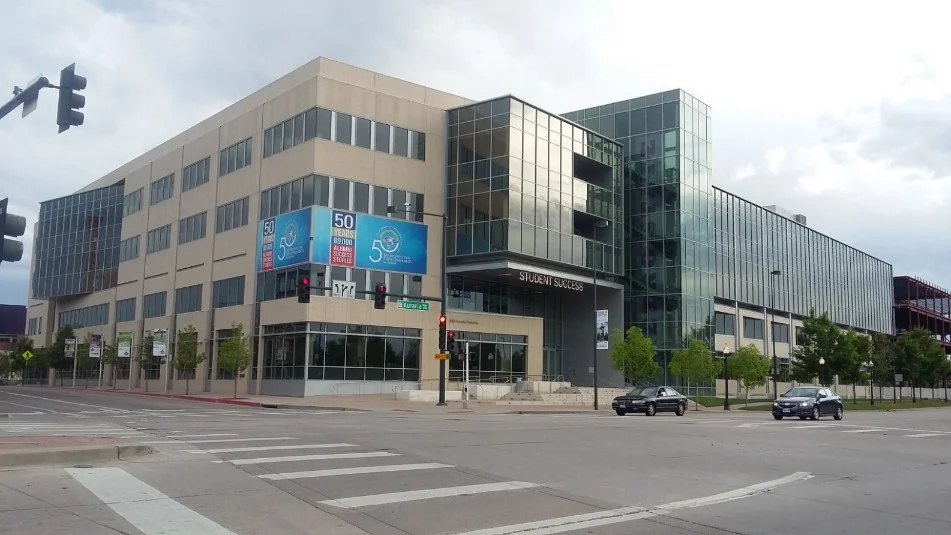
Metropolitan State University of Denver is a public, metropolitan institution that is dedicated to meeting the educational needs of a diverse, urban, and working student population. Admissions prioritize professional readiness, academic preparedness, and potential for community contribution. The university seeks motivated students who are ready to balance their academic responsibilities with professional planning and who are eager to leverage the university's industry-linked curriculum.
Prospective students should highlight their maturity, career focus, and consistency in academic work. Demonstrating a clear approach to one's future professional goals is key, as the university emphasizes connecting classroom learning to real-world experiences. The admissions committee values applicants who are proactive, focused, and ready to participate in a collaborative campus culture that prioritizes student success and the development of the whole person within a supportive, urban academic setting.
Metropolitan State University of Denver runs an open-access admission policy. With a 99.1% acceptance rate, the focus is on getting qualified students in, not filtering them out.

Source: IPEDS & College Scorecard (Nov 2025).
Metropolitan State University of Denver follows a Rolling Admissions policy, meaning applications are reviewed as they arrive and there is no single fixed deadline.
Metropolitan State University of Denver reviews applications continuously throughout the year. Seats and scholarships are awarded on a first-come, first-served basis, so applying early gives you a significant advantage for both admission and financial aid.
💡 The scholarship deadline (2026/03/01 (priority scholarship deadline)) often falls before the regular admission deadline. Submit your application and FAFSA early to be considered for maximum aid.
Deadlines are verified from official institutional sources but may change each cycle. Always confirm final dates on the official website.
The average GPA of admitted students at Metropolitan State University of Denver is 3.03. That makes admissions here moderately selective. Most admitted students carry a blend of A's, B's, and the occasional C.
A stronger SAT or ACT score can comfortably offset a GPA on the lower end of this range.
Most schools report GPA on a weighted or unweighted 4.0 scale differently. For an unweighted profile like this, students with AP/IB coursework typically carry a weighted GPA of 3.23–3.43.Assessment: Holistic review is critical for admission.
Recommended Strategy: Requires Contextual Factors (Leadership, hardship, or talent).
Where your GPA falls in this range shapes what the rest of your application needs to do:
Data verified via IPEDS, College Scorecard (Nov 2025) and the Common Data Set (CDS). Expert Review led by Sohaib Khan and Dr. Waseem.
Real-Time Sensitive Analysis — based on Metropolitan State University of Denver's verified institutional data
Adjust the sliders to see how every decimal point affects your outcome.
✅ Verified Data: Institutional records for 2026.
Calculated via College Portal's Human-Intelligence (HI) Methodology & Editorial Standards. Verified by Sohaib Ahmad Khan.
Standardized scores still matter here: aim for the middle 50% range of the 2026 admitted class below, and if Metropolitan State University of Denver is test-optional, a high score submitted voluntarily still helps with merit scholarships.
The average SAT score of admitted students at Metropolitan State University of Denver is 1014 on the 1600-point scale.
This average is on the lower end nationally, making a strong score here a genuine advantage.
If your score is below 880, retaking the SAT is strongly recommended to improve your chances at Metropolitan State University of Denver. Retaking multiple times is completely normal. Most competitive applicants sit for it two or three times. There's no official limit on attempts.
| Section | Average | 25th Percentile | 75th Percentile |
|---|---|---|---|
| SAT Math | 485 | 430 | 540 |
| SAT Reading | 510 | 450 | 570 |
| SAT Composite | 1014 | 880 | 1110 |
Below 880, you're behind most admitted students; at 1110 or above, you're ahead of 75% of them. (25th/75th percentile = the score below which that share of admitted students fall.)
View list of all colleges with average SAT score of 1000
A 1100 SAT puts you ahead of most of Metropolitan State University of Denver's admitted class, but admissions still weighs GPA, course rigor, and essays alongside it. A strong score opens the door; the rest of your profile decides what happens next.
The average ACT score at Metropolitan State University of Denver is 20.

This average is slightly below the national ACT mean.
| Section | Average | 25th Percentile | 75th Percentile |
|---|---|---|---|
| ACT Math | 20 | 16 | 24 |
| ACT English | 20 | 16 | 24 |
| ACT Composite | 20 | 17 | 23 |
A 23 ACT puts you ahead of 75% of Metropolitan State University of Denver's admitted students. That's a strong position, though the ACT is only one benchmark among several that admissions weighs.
Unlike the SAT, the ACT scores four separate sections: English, Math, Reading, and Science, each on a 1–36 scale. A noticeably weak section, especially Science at STEM-focused schools, stands out to reviewers, so it's worth checking your section breakdown for outliers before applying.
Your ACT score clears the first filter, but GPA, course rigor, extracurricular depth, recommendations, and essays are what carry an application the rest of the way at Metropolitan State University of Denver.
Metropolitan State University of Denver's open-access model means the real strategic decisions happen after enrollment: course planning, advising, and whether to transfer later.
Metropolitan State University of Denver was founded in 1965 specifically as Colorado's "opportunity school" - and by statute, it is required to maintain accessibility and among the lowest tuitions of any four-year Colorado college. This is not a marketing claim but a legislative mandate. The practical result for students is a 99% acceptance rate (per U.S. News and IPEDS data), no application fee, no essay requirement, and no letters of recommendation for general undergraduate admission. Test scores (SAT/ACT) are optional and considered but not required. The admissions process is GPA-and-transcript driven, with rolling decisions. This open-access structure also means that MSU Denver serves a largely non-traditional student population: approximately 80% of students work while enrolled, 53%+ are students of color, MSU Denver is a recognized Hispanic Serving Institution, and a significant share are first-generation college students. Counselors placing students at MSU Denver should understand that the peer environment, campus culture, and academic support infrastructure are designed for working adults and commuters rather than the traditional residential college experience - Lynx Crossing, the shared dormitory with CU Denver and Community College of Denver, has very limited space and requires early January application.
MSU Denver shares the Auraria Campus in downtown Denver with the University of Colorado Denver (CU Denver) and Community College of Denver (CCD). All three institutions share facilities including the Auraria Library (the busiest academic library in Colorado), the Tivoli Student Union (a reclaimed 1869 brewery), the Salazar Wellness Center, and Lynx Crossing housing. But they are entirely separate institutions with separate tuition, separate degrees, separate admission processes, separate academic programs, and separate financial aid. Students sometimes arrive at Auraria assuming they have access to CU Denver programs because they attend MSU Denver - this is incorrect. MSU Denver offers over 100 majors across six colleges: Business (AACSB-accredited), Aerospace, Engineering, Computing and Design; Health and Human Sciences; Letters, Arts and Sciences; Education; and Hospitality. CU Denver offers a separate and differently structured set of programs at a higher tuition rate. Knowing which programs are offered by MSU Denver versus CU Denver is essential before advising any student on major availability.
MSU Denver's Department of Aviation and Aerospace Science has been training pilots, air traffic controllers, flight dispatchers, aerospace professionals, and space commercialization specialists for over 40 years, operating from the Seventh Street Building on the Auraria Campus. The program offers BS degrees in Aviation and Aerospace Science with concentrations in Professional Pilot, Air Traffic Management, Airport Management, Aircraft Dispatch, Space Science, and Space Systems Engineering Technology - an unusually broad aviation and space curriculum for a public urban university. The department manages a dozen separately funded, privately endowed scholarships with their own application requirements, including essays on career goals in aviation (250 words for the Jeppesen Scholarship), GPA minima (2.5+ overall, 3.0+ in aviation coursework for the Mock Scholarship), and proof of intended use for flight-time expenses (Diehl Scholarship). Students interested in Aviation should contact Professor Tyler Bachelder in the AVS department directly in addition to completing the general MSU Denver Scholarship Application by the March 1 priority deadline.
MSU Denver's institutional scholarship application (submitted through the AcademicWorks platform after admission) uses a general application that auto-matches students to scholarships for which they meet minimum eligibility criteria. Students complete one application and the system surfaces relevant awards - including the Reisher Scholarship (for full-time students with unmet financial need and 3.0+ GPA), the President Academic Achievement award (transfer GPA 3.25+, up to $1,000/term), the PTK (Phi Theta Kappa) Scholarship ($1,000/year for Honors Transfer members with 3.5+ GPA), and the Selfridge-Kalal Hospitality Scholarship for School of Hospitality students. The priority deadline is March 1 each year, and scholarships are awarded on a first-come, first-served basis until funds are exhausted. Students who apply late - whether because they enrolled mid-year or simply didn't know the deadline existed - compete for whatever remains after the priority pool is processed. WUE tuition pricing (150% of in-state tuition for residents of 15 eligible western states) is also available for out-of-state students and can be combined with institutional scholarship awards.
The most common failure for MSU Denver applicants from outside Colorado is arriving with the assumption that the urban downtown campus provides the same social infrastructure as a traditional residential campus - and discovering that approximately 90% of students commute, on-campus housing in Lynx Crossing is extremely limited and requires a January 1 application opening date to have any realistic chance, and campus life between classes is anchored by urban Denver amenities rather than campus programming. Students who enroll expecting a traditional residential college experience and discover the commuter reality mid-semester frequently transfer out before completing a full year. A second failure specific to transfer students: not requesting transcript evaluation before enrolling in first-semester courses. MSU Denver requires transcripts to be submitted for evaluation, and the transfer credit assessment must be completed before advising appointments can generate an accurate degree plan - students who register without this step frequently duplicate coursework they have already completed elsewhere.
At $22,825/year against a $52,093 median graduate salary, Metropolitan State University of Denver is worth weighing against your specific program and financial situation. The numbers below give you a real basis for that decision.
The average household income among admitted students is $71,900, with a graduate unemployment rate of 2.92%.
The sticker price is $22,825/year, but the average net price students actually pay, after Pell and federal grants, is closer to $14,294.
35.1% of students receive a Pell Grant and 29.6% take federal loans at Metropolitan State University of Denver. File your FAFSA early and list Metropolitan State University of Denver as a choice to be considered for both.
Median earnings 10 years after enrollment (roughly 4–6 years post-graduation) are $52,093. That's about 28% above the U.S. median graduate income.

These schools have lower average SAT or ACT scores than Metropolitan State University of Denver. If your SAT or ACT score is slightly lower, you'll be competitive for these schools.
| School | Location | SAT | ACT |
|---|---|---|---|
| Alabama State University | Montgomery, AL | 977 | 18 |
| Baptist Health College Little Rock | Little Rock, AR | 980 | 20 |
| University of Bridgeport | Bridgeport, CT | 985 | NA |
| Delaware State University | Dover, DE | 984 | 24 |
| Abraham Baldwin Agricultural College | Tifton, GA | 994 | 19 |
| College of Coastal Georgia | Brunswick, GA | 1001 | 18 |
| Clayton State University | Morrow, GA | 973 | 18 |
| Columbus State University | Columbus, GA | 994 | 21 |
| Georgia Southwestern State University | Americus, GA | 998 | 19 |
| Life University | Marietta, GA | 994 | 17 |

These schools have the same range of average SAT or ACT scores as Metropolitan State University of Denver. If your SAT or ACT score is competitive, you'll be competitive for these schools also.
| School | Location | SAT | ACT |
|---|---|---|---|
| Faulkner University | Montgomery, AL | 1016 | 20 |
| University of West Alabama | Livingston, AL | 1015 | 20 |
| Central Baptist College | Conway, AR | 1022 | 20 |
| University of Arkansas Community College-Morrilton | Morrilton, AR | 1020 | 20 |
| Williams Baptist University | Walnut Ridge, AR | 1018 | 19 |

These schools have higher average SAT or ACT scores than Metropolitan State University of Denver. If you improve your SAT or ACT score, you'll be competitive for these schools.
| School | Location | SAT | ACT |
|---|---|---|---|
| Auburn University at Montgomery | Montgomery, AL | 1090 | 21 |
| Jacksonville State University | Jacksonville, AL | 1055 | 21 |
| Spring Hill College | Mobile, AL | 1090 | 22 |
| Troy University | Troy, AL | 1086 | 22 |
| University of Arkansas at Little Rock | Little Rock, AR | 1049 | 21 |
Median graduate earnings at Metropolitan State University of Denver run about $52,093 a year.
At about $22,825 a year, Metropolitan State University of Denver is on the more affordable end.
About 35.1% receive a Pell Grant at Metropolitan State University of Denver. The odds are moderate and largely income-dependent, but an early FAFSA filing still helps.
At 99.1%, Metropolitan State University of Denver's acceptance rate is on the more attainable end compared to top-tier selective schools.
Admitted students at Metropolitan State University of Denver average a 3.03 GPA.
Metropolitan State University of Denver doesn't publish a hard GPA floor, but landing at or above 2.73 keeps you in the typical applicant range; below it, lean on essays and recommendations.
Below 2.63, Metropolitan State University of Denver becomes a harder reach, though a strong test score, meaningful activities, and AP/IB coursework can still make a real case.
A strong SAT score matters at Metropolitan State University of Denver — aim above 1014, ideally within the 880–1110 range admitted students typically fall in.
Metropolitan State University of Denver follows Rolling Admissions. Applications are reviewed year-round, so applying early is your best strategy.
The scholarship/financial aid priority deadline is 2026/03/01 (priority scholarship deadline). Submit FAFSA before then for maximum consideration.
Yes, transfers are common. Have transcripts, recommendation letters, and a solid personal statement ready to make your case.
Strong academics, a focused extracurricular profile, and standout essays move the needle most, along with a competitive SAT/ACT score where relevant.