Public
Accredited · Middle States Commission on Higher Education
Ewing, New Jersey
62.1% Acceptance Rate
A complete at-a-glance picture of every metric that matters for your 2026 application
The College of New Jersey, founded in 1855, is a top-ranked public liberal arts college with strengths in education, engineering, and business.
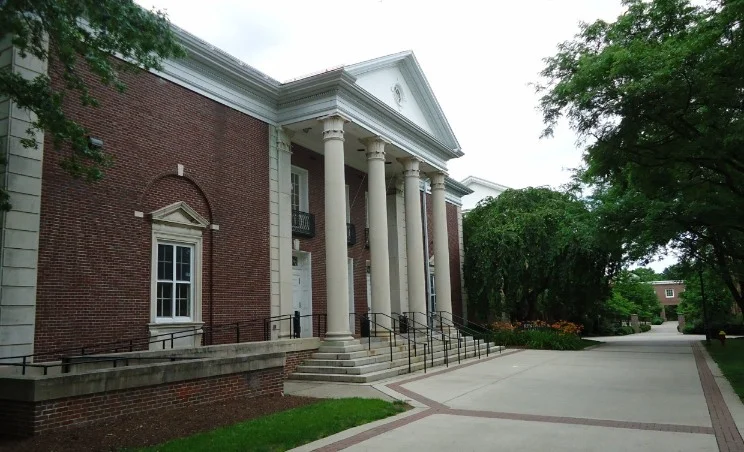
The 289-acre campus features the STEM Building, the Art and Interactive Multimedia Building, and new residence halls. TCNJ's small class sizes foster close faculty mentorship.
The College of New Jersey takes a broad view of applicants, admitting about 62.1% each year.

Source: IPEDS & College Scorecard (Nov 2025).
The application deadline for The College of New Jersey is November 1 for Early Decision I applicants, with additional plans listed below. Admission decisions are typically released by December 15.
💡 The scholarship deadline (Merit scholarship priority: 2025/11/01) often falls before the regular admission deadline. Submit your application and FAFSA early to be considered for maximum aid.
Deadlines are verified from official institutional sources but may change each cycle. Always confirm final dates on the official website.
The average GPA of admitted students at TCNJ is 3.29. That makes admissions here competitive, but not extremely selective. Most admitted students carry a mix of A's and B's.
In the 2.99–3.29 range, a high SAT or ACT score still carries real weight.
Most schools report GPA on a weighted or unweighted 4.0 scale differently. For an unweighted profile like this, students with AP/IB coursework typically carry a weighted GPA of 3.49–3.69.Assessment: Holistic review is critical for admission.
Recommended Strategy: Requires Contextual Factors (Leadership, hardship, or talent).
Where your GPA falls in this range shapes what the rest of your application needs to do:
Data verified via IPEDS, College Scorecard (Nov 2025) and the Common Data Set (CDS). Expert Review led by Sohaib Khan and Dr. Waseem.
Real-Time Sensitive Analysis — based on The College of New Jersey's verified institutional data
Adjust the sliders to see how every decimal point affects your outcome.
✅ Verified Data: Institutional records for 2026.
Calculated via College Portal's Human-Intelligence (HI) Methodology & Editorial Standards. Verified by Sohaib Ahmad Khan.
Standardized scores still matter here: aim for the middle 50% range of the 2026 admitted class below, and if TCNJ is test-optional, a high score submitted voluntarily still helps with merit scholarships.
The average SAT score of admitted students at The College of New Jersey is 1247 on the 1600-point scale.
This sits close to the national average SAT score.
If your score is below 1140, retaking the SAT is strongly recommended to improve your chances at TCNJ. Retaking multiple times is completely normal. Most competitive applicants sit for it two or three times. There's no official limit on attempts.
| Section | Average | 25th Percentile | 75th Percentile |
|---|---|---|---|
| SAT Math | 620 | 570 | 670 |
| SAT Reading | 620 | 570 | 670 |
| SAT Composite | 1247 | 1140 | 1340 |
Below 1140, you're behind most admitted students; at 1340 or above, you're ahead of 75% of them. (25th/75th percentile = the score below which that share of admitted students fall.)
View list of all colleges with average SAT score of 1250
A 1350 SAT puts you ahead of most of TCNJ's admitted class, but admissions still weighs GPA, course rigor, and essays alongside it. A strong score opens the door; the rest of your profile decides what happens next.
The average ACT score at TCNJ is 28.

This average is solidly above the national mean without being elite-tier.
| Section | Average | 25th Percentile | 75th Percentile |
|---|---|---|---|
| ACT Math | 27 | 25 | 29 |
| ACT Composite | 28 | 25 | 31 |
A 31 ACT puts you ahead of 75% of TCNJ's admitted students. That's a strong position, though the ACT is only one benchmark among several that admissions weighs.
Unlike the SAT, the ACT scores four separate sections: English, Math, Reading, and Science, each on a 1–36 scale. A noticeably weak section, especially Science at STEM-focused schools, stands out to reviewers, so it's worth checking your section breakdown for outliers before applying.
Your ACT score clears the first filter, but GPA, course rigor, extracurricular depth, recommendations, and essays are what carry an application the rest of the way at TCNJ.
TCNJ is accessible to students who show core competency. Focus on proving readiness for college-level work and locking in financial aid.
TCNJ explicitly states the Common App essay serves as the official essay for evaluation, but requires an additional secondary writing prompt specifically designed to explore a student's interest in TCNJ. Make sure students draft this as a genuinely separate piece focused on fit and motivation, not a condensed rehash of their personal statement - confirm the current exact prompt and word count directly on the live application, since TCNJ's own page describes its purpose without quoting exact text.
TCNJ's 7-year medical, optometry, and physical therapy programs (plus the related 4+3 PT and 4+2 speech pathology tracks) run on unique application timelines and are explicitly unavailable to Early Decision or Early Action applicants. Flag this immediately for any pre-health student considering these combined-degree pathways, since assuming standard ED/EA eligibility could derail their plan.
Visual Art and Graphic Design applicants are strongly encouraged (not strictly required) to submit a portfolio, with deadlines tied to each admission round (Nov. 1 for ED I, Dec. 15 for EA, Feb. 15 for general), while Music applicants face a hard audition requirement by Nov. 19 (ED) or March 15 (general). Build separate portfolio/audition prep timelines for these students well before the standard application deadline, since these dates often fall earlier than the general application deadline itself.
TCNJ's overall acceptance rate (~62%) masks substantially tighter competition within specific high-demand majors like nursing, which admits a capped number of students per class regardless of overall university selectivity. For students targeting these programs, set expectations based on the program's own competitiveness rather than the university-wide acceptance rate, and discuss whether applying as an "open options" or related major might offer a more flexible entry path.
Don't let students treat TCNJ's secondary writing prompt as optional or low-effort just because it's described as "secondary" - it functions as a genuine fit-assessment tool distinct from the Common App essay, and skipping real effort here removes one of TCNJ's only differentiated, school-specific evaluation points in an otherwise numbers-heavy review process.
Whether TCNJ is worth it depends less on its reputation and more on your program choice, financial aid package, and career goals. Here's the data to weigh it against.
The average household income among admitted students is $86,800, with a graduate unemployment rate of 3.15%.
The sticker price is $37,070/year, but the average net price students actually pay, after Pell and federal grants, is closer to $25,458.
20.1% of students receive a Pell Grant and 47.4% take federal loans at TCNJ. File your FAFSA early and list TCNJ as a choice to be considered for both.
Median earnings 10 years after enrollment (roughly 4–6 years post-graduation) are $73,323. That's about 81% above the U.S. median graduate income.

These schools have lower average SAT or ACT scores than The College of New Jersey. If your SAT or ACT score is slightly lower, you'll be competitive for these schools.
| School | Location | SAT | ACT |
|---|---|---|---|
| Birmingham-Southern College | Birmingham, AL | 1197 | 24 |
| University of Mobile | Mobile, AL | 1220 | 24 |
| Samford University | Birmingham, AL | 1203 | 26 |
| John Brown University | Siloam Springs, AR | 1222 | 26 |
| Ouachita Baptist University | Arkadelphia, AR | 1212 | 25 |
| California Lutheran University | Thousand Oaks, CA | 1224 | 26 |
| University of Redlands | Redlands, CA | 1231 | 28 |
| Eastern Connecticut State University | Willimantic, CT | 1200 | NA |
| University of Hartford | West Hartford, CT | 1207 | 29 |
| Quinnipiac University | Hamden, CT | 1212 | 27 |

These schools have the same range of average SAT or ACT scores as The College of New Jersey. If your SAT or ACT score is competitive, you'll be competitive for these schools also.
| School | Location | SAT | ACT |
|---|---|---|---|
| University of Alabama at Birmingham | Birmingham, AL | 1251 | 26 |
| Embry-Riddle Aeronautical University-Prescott | Prescott, AZ | 1256 | 27 |
| Eckerd College | Saint Petersburg, FL | 1256 | 27 |
| Embry-Riddle Aeronautical University-Daytona Beach | Daytona Beach, FL | 1256 | 27 |
| Covenant College | Lookout Mountain, GA | 1254 | 27 |

These schools have higher average SAT or ACT scores than The College of New Jersey. If you improve your SAT or ACT score, you'll be competitive for these schools.
| School | Location | SAT | ACT |
|---|---|---|---|
| University of Alabama in Huntsville | Huntsville, AL | 1321 | 28 |
| The University of Alabama | Tuscaloosa, AL | 1287 | 28 |
| Auburn University | Auburn, AL | 1318 | 28 |
| University of the Pacific | Stockton, CA | 1303 | 27 |
| Point Loma Nazarene University | San Diego, CA | 1278 | 26 |
Median graduate earnings at The College of New Jersey run about $73,323 a year.
The College of New Jersey costs roughly $37,070 a year, and most students combine this with scholarships or aid.
The College of New Jersey's Pell Grant rate of 20.1% sits below the national average. Merit-based aid is worth checking regardless of income.
At 62.1%, The College of New Jersey's acceptance rate is on the more attainable end compared to top-tier selective schools.
Admitted students at The College of New Jersey average a 3.29 GPA.
The College of New Jersey doesn't publish a hard GPA floor, but landing at or above 2.99 keeps you in the typical applicant range; below it, lean on essays and recommendations.
Below 2.89, The College of New Jersey becomes a harder reach, though a strong test score, meaningful activities, and AP/IB coursework can still make a real case.
A strong SAT score matters at The College of New Jersey — aim above 1247, ideally within the 1140–1340 range admitted students typically fall in.
The application deadline for The College of New Jersey is November 1 for Early Decision I applicants. Admission decisions are released by December 15.
The application fee is 75. Fee waivers may be available. Check with admissions.
The scholarship/financial aid priority deadline is Merit scholarship priority: 2025/11/01. Submit FAFSA before then for maximum consideration.
Yes, transfers are common. Have transcripts, recommendation letters, and a solid personal statement ready to make your case.
Strong academics, a focused extracurricular profile, and standout essays move the needle most, along with a competitive SAT/ACT score where relevant.