
Public
Accredited · Middle States Commission on Higher Education
Media, Pennsylvania
A complete at-a-glance picture of every metric that matters for your 2026 application
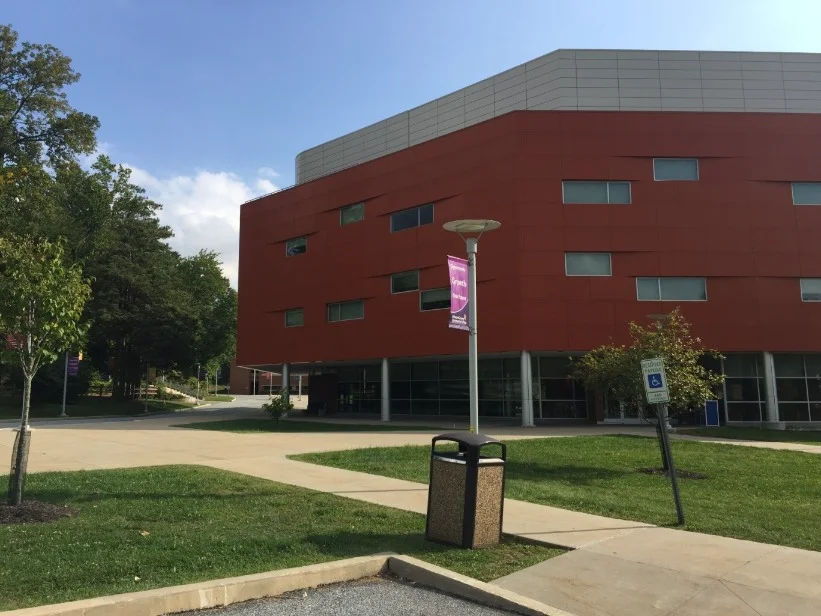
Delaware County Community College serves Philadelphia's western suburbs. Established in 1967, DCCC features the STEM Center.
The college excels in biotechnology and computer science programs. DCCC's 'Pathways' program guarantees transfer to partner universities.
Delaware County Community College runs an open-access admission policy. With a 100% acceptance rate, the focus is on getting qualified students in, not filtering them out.

Slightly below-average GPA? A strong test score or clear leadership track record can still keep you competitive.
Source: IPEDS & College Scorecard (Nov 2025).
Delaware County Community College follows a Rolling Admissions policy, meaning applications are reviewed as they arrive and there is no single fixed deadline.
Delaware County Community College reviews applications continuously throughout the year. Seats and scholarships are awarded on a first-come, first-served basis, so applying early gives you a significant advantage for both admission and financial aid.
Deadlines are verified from official institutional sources but may change each cycle. Always confirm final dates on the official website.
Real-Time Sensitive Analysis — based on Delaware County Community College's verified institutional data
Adjust the sliders to see how every decimal point affects your outcome.
⚠️ Note: Predicting based on regional averages as this institution does not publicly report full score datasets.
Calculated via College Portal's Human-Intelligence (HI) Methodology & Editorial Standards. Verified by Sohaib Ahmad Khan.
Standardized scores still matter here: aim for the middle 50% range of the 2026 admitted class below, and if Delaware County Community College is test-optional, a high score submitted voluntarily still helps with merit scholarships.
Getting into Delaware County Community College is the easy part. What matters next is using placement testing, advising, and available resources to set up a strong first year.
General DCCC admission is open and free, but Nursing requires you to first complete the general application, then separately petition for the program after attending a strongly recommended information session and completing all prerequisites. Treat the info session as your real orientation to how the petition and scoring rubric work - going in without it means learning the rules for the first time while your competitors already know them.
Only your first three TEAS attempts within the designated testing period are considered, your highest score comes from a single testing session (scores are never split or mixed across different attempts), and there is no rounding - a 58.9% does not become a passing 59%. Treat each attempt as consequential and prepare seriously before testing, rather than treating TEAS as something you can casually retake until it feels right.
If offered a seat in the Nursing program, you're required to pay a $150 deposit by a fixed deadline (the deadline extends only if you're offered a seat after the original date has passed). Have your payment method ready before you apply so an offer doesn't sit unanswered while you scramble to arrange funds.
DCCC has formal articulation agreements with several four-year colleges that let nursing students complete a BSN after their ADN. Meet with a Transfer Advisor as early as your first semester at DCCC - not after ADN graduation - so your DCCC coursework aligns with your eventual four-year program's requirements from the start, rather than discovering a misalignment later.
Because TEAS feels like just another test and general DCCC admission is open and low-stakes, applicants often schedule retakes casually - not realizing the program only counts the first three attempts in the testing window, uses your single best session rather than your best individual sections across sessions, and applies a hard no-rounding rule. A casually-scheduled or rushed final attempt can permanently cap your application's competitiveness.
Delaware County Community College offers a rigorous academic environment, but 'worth it' is a personal calculation of cost, program fit, and outcomes. The figures below are a starting point.
The average household income among admitted students is $67,500, with a graduate unemployment rate of 3.45%.
The sticker price is $12,957/year, but the average net price students actually pay, after Pell and federal grants, is closer to $7,395.
39.8% of students receive a Pell Grant and 49.5% take federal loans at Delaware County Community College. File your FAFSA early and list Delaware County Community College as a choice to be considered for both.
Median earnings 10 years after enrollment (roughly 4–6 years post-graduation) are $45,391. That's about 12% above the U.S. median graduate income.
Median earnings for Delaware County Community College graduates sit around $45,391 a year.
At about $12,957 a year, Delaware County Community College is on the more affordable end.
About 39.8% receive a Pell Grant at Delaware County Community College. The odds are moderate and largely income-dependent, but an early FAFSA filing still helps.
Delaware County Community College follows Rolling Admissions. Applications are reviewed year-round, so applying early is your best strategy.
Yes, transfers are common. Have transcripts, recommendation letters, and a solid personal statement ready to make your case.
Strong academics, a focused extracurricular profile, and standout essays move the needle most, along with a competitive SAT/ACT score where relevant.