
Non-Profit Private
Accredited · New England Commission on Higher Education
Cambridge, Massachusetts
3.5% Acceptance Rate
A complete at-a-glance picture of every metric that matters for your 2026 application
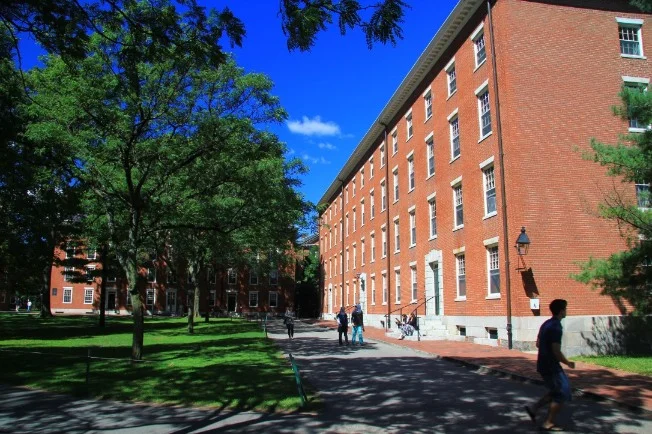
Harvard University, established in 1636, is the oldest institution of higher education in the United States and a symbol of academic excellence. Located in Cambridge, Massachusetts, Harvard is renowned for its prestigious faculty, rigorous curriculum, and historic campus. The university offers a wide range of programs across its schools, including Harvard College, Law School, Business School, and Medical School. Harvard's libraries, museums, and research centers are among the best in the world, providing students with unparalleled resources. Consistently ranked as one of the top universities globally, Harvard attracts the brightest minds from every corner of the world.
Harvard's commitment to innovation and leadership is evident in its alumni network, which includes U.S. presidents, Nobel laureates, and industry leaders. The university fosters a vibrant intellectual community, encouraging interdisciplinary collaboration and critical thinking. Harvard's financial aid policies ensure accessibility, allowing students from diverse backgrounds to benefit from its world-class education. The campus blends historic charm with modern facilities, offering state-of-the-art labs, lecture halls, and student spaces. Harvard's global impact extends beyond academia, influencing policy, business, and culture. Its dedication to excellence continues to set the standard for higher education worldwide.
With a 3.5% acceptance rate, Harvard University sits firmly in the elite tier of US admissions. Only 4 in 100 applicants are offered a seat.

At this tier, meeting the average GPA and test scores is the baseline, not the differentiator. Your essays and recommendations are what separate you from the rest of an already-strong pool.
Source: IPEDS & College Scorecard (Nov 2025).
The application deadline for Harvard University is November 1 for Restrictive Early Action applicants, with additional plans listed below. Admission decisions are typically released by December 15.
💡 The scholarship deadline (November 1, 2026) often falls before the regular admission deadline. Submit your application and FAFSA early to be considered for maximum aid.
Deadlines are verified from official institutional sources but may change each cycle. Always confirm final dates on the official website.
The average GPA of admitted students at Harvard is 4. That makes admissions here extremely selective on GPA. Near the top of your class is the expectation, not the exception.. Most admitted students carry mostly A's across the board.
AP or IB courses aligned with your intended major (calculus and physics for engineering, for instance) meaningfully strengthen an application here.
Most schools report GPA on a weighted or unweighted 4.0 scale differently. For an unweighted profile like this, students with AP/IB coursework typically carry a weighted GPA of 4.20–4.40.Assessment: Extreme selectivity; requires elite academic standing.
Recommended Strategy: High Course Rigor (AP/IB/Honors) to validate the grade.
Where your GPA falls in this range shapes what the rest of your application needs to do:
Data verified via IPEDS, College Scorecard (Nov 2025) and the Common Data Set (CDS). Expert Review led by Sohaib Khan and Dr. Waseem.
Real-Time Sensitive Analysis — based on Harvard University's verified institutional data
Adjust the sliders to see how every decimal point affects your outcome.
✅ Verified Data: Institutional records for 2026.
Calculated via College Portal's Human-Intelligence (HI) Methodology & Editorial Standards. Verified by Sohaib Ahmad Khan.
Standardized scores still matter here: aim for the middle 50% range of the 2026 admitted class below, and if Harvard is test-optional, a high score submitted voluntarily still helps with merit scholarships.
The average SAT score of admitted students at Harvard University is 1553 on the 1600-point scale.
This places Harvard in the top tier nationally for SAT scores. It sits well above the 75th percentile of all US test-takers.
If your score is below 1500, retaking the SAT is strongly recommended to improve your chances at Harvard. Retaking multiple times is completely normal. Most competitive applicants sit for it two or three times. There's no official limit on attempts.
| Section | Average | 25th Percentile | 75th Percentile |
|---|---|---|---|
| SAT Math | 780 | 760 | 800 |
| SAT Reading | 760 | 740 | 780 |
| SAT Composite | 1553 | 1500 | 1580 |
Below 1500, you're behind most admitted students; at 1580 or above, you're ahead of 75% of them. (25th/75th percentile = the score below which that share of admitted students fall.)
View list of all colleges with average SAT score of 1550
A 1600 SAT puts you ahead of most of Harvard's admitted class, but admissions still weighs GPA, course rigor, and essays alongside it. A strong score opens the door; the rest of your profile decides what happens next.
The average ACT score at Harvard is 35.
An average of 35 places Harvard among the most ACT-competitive schools nationally.
| Section | Average | 25th Percentile | 75th Percentile |
|---|---|---|---|
| ACT Math | 35 | 33 | 36 |
| ACT English | 36 | 35 | 36 |
| ACT Composite | 35 | 34 | 36 |
A 36 ACT puts you ahead of 75% of Harvard's admitted students. That's a strong position, though the ACT is only one benchmark among several that admissions weighs.
Unlike the SAT, the ACT scores four separate sections: English, Math, Reading, and Science, each on a 1–36 scale. A noticeably weak section, especially Science at STEM-focused schools, stands out to reviewers, so it's worth checking your section breakdown for outliers before applying.
Your ACT score clears the first filter, but GPA, course rigor, extracurricular depth, recommendations, and essays are what carry an application the rest of the way at Harvard.
Harvard isn't looking for well-rounded applicants. It's looking for 'pointy.' The strategy here is to make your one strongest area impossible to overlook.
Harvard rejects the majority of valedictorians who apply each year as well as a sizable chunk of those who bring 1600 SAT/36 ACT scores to the table - a statement that crystallizes the central reality of Harvard admissions: perfect academic credentials are a prerequisite, not a differentiator. Harvard looks for students who have reached exceptional levels in one or two areas, not a broad collection of average achievements. This "spike" is not simply being good at something; it is being demonstrably exceptional at it in a way that is legible at the national or international level - a published research paper, a nationally ranked athletic achievement, a piece of creative work with real public impact, or a civic initiative that produced measurable change. Harvard's own data, particularly its use of extracurricular and personal ratings, shows that these components are heavily weighted in final decisions, and many academically perfect applicants are rejected due to insufficient distinction in these areas. Begin building your defining spike years before your application - Harvard does not admit people who became remarkable in senior year.
Students applying to Harvard College in the 2025?26 admissions cycle are required to respond to five supplemental essays, each no more than 150 words - and each response should convey something new and interesting about you that isn't mentioned elsewhere in your application. The constraint of 150 words is the most disorienting aspect of Harvard's supplemental essays for most applicants: it is not enough space for a polished narrative arc, but it is more than enough space to reveal whether you can think and communicate with precision, specificity, and genuine self-awareness. Harvard's essay prompts are designed to help admissions officers understand how a student thinks, reflects, and may contribute to campus life, with the Common Data Set listing the application essay as a crucial factor in admission decisions. Map all five essays before writing a single one - assign each a distinct facet of your identity, experience, or intellectual life - and ensure that a reader who finishes all five feels they have encountered a full, three-dimensional human being whose contributions to Harvard's community are clearly imaginable.
Harvard offers Restrictive Early Action (REA), a non-binding program that places no obligation on you to enroll if admitted. Applying REA to Harvard restricts you from applying Early Decision or Early Action at any private college, but you can apply Early Action to any public college. Harvard's REA round historically produces a 7?9% acceptance rate compared to the overall rate of approximately 3.4?4.2% - but Harvard explicitly states it does not give preference based on application round, and the higher REA rate reflects the quality of applicants who apply early to their first-choice school, not a lower bar. Applying REA is strategically sound if - and only if - your application is genuinely complete and polished by November 1. A rushed REA application is worse than a carefully prepared Regular Decision application. If you expect significant profile improvements during senior year - better grades, stronger extracurriculars, or updated test scores - RD may let you reflect those improvements, making REA the right choice only for applicants whose profile is already at its strongest.
As of the 2025?26 application cycle, Harvard requires SAT or ACT scores for first-year and transfer applicants, with limited alternatives for students who genuinely cannot access these exams - a policy reversal from its test-optional years that reflects Harvard's conclusion that standardized test data meaningfully informs its holistic review. 94.40% of first-year students starting Fall 2024 were in the top 10th of their high school graduating class, and 74% had an unweighted GPA of 4.0. Harvard requires two teacher recommendation letters and a school counselor letter - recommendations are highlighted in Harvard's Common Data Set as a crucial factor, and Harvard relies on them to understand who you are in the classroom and community. Choose recommenders who can speak to the specific intellectual qualities that distinguish you - curiosity, originality, collaborative depth - not just academic performance. Critically, legacy students have comprised approximately 15% of each incoming class while recruited athletes account for another 10%, meaning that if you fall outside of these institutional priority categories, your application must be exceptionally strong on every dimension simultaneously.
Harvard offers a rigorous academic environment, but 'worth it' is a personal calculation of cost, program fit, and outcomes. The figures below are a starting point.
The average household income among admitted students is $76,900, with a graduate unemployment rate of 3.46%.
The sticker price is $82,842/year, but the average net price students actually pay, after Pell and federal grants, is typically much lower.
15.8% of students receive a Pell Grant and 4.9% take federal loans at Harvard. File your FAFSA early and list Harvard as a choice to be considered for both.
Median earnings 10 years after enrollment (roughly 4–6 years post-graduation) are $101,817. That's about 151% above the U.S. median graduate income.

These schools have lower average SAT or ACT scores than Harvard University. If your SAT or ACT score is slightly lower, you'll be competitive for these schools.
| School | Location | SAT | ACT |
|---|---|---|---|
| Claremont McKenna College | Claremont, CA | 1514 | 34 |
| Harvey Mudd College | Claremont, CA | 1537 | 35 |
| Pomona College | Claremont, CA | 1520 | 34 |
| Wesleyan University | Middletown, CT | 1513 | 34 |
| Yale University | New Haven, CT | 1534 | 34 |
| Emory University | Atlanta, GA | 1507 | 33 |
| Northwestern University | Evanston, IL | 1526 | 34 |
| University of Notre Dame | Notre Dame, IN | 1510 | 34 |
| Bowdoin College | Brunswick, ME | 1514 | 34 |
| Northeastern University | Boston, MA | 1505 | 34 |

These schools have the same range of average SAT or ACT scores as Harvard University. If your SAT or ACT score is competitive, you'll be competitive for these schools also.
| School | Location | SAT | ACT |
|---|---|---|---|
| University of Chicago | Chicago, IL | 1554 | 35 |
| Johns Hopkins University | Baltimore, MD | 1553 | 35 |
| Massachusetts Institute of Technology | Cambridge, MA | 1553 | 35 |
| Columbia University in the City of New York | New York, NY | 1547 | 35 |
| Carnegie Mellon University | Pittsburgh, PA | 1545 | 35 |

These schools have higher average SAT or ACT scores than Harvard University. If you improve your SAT or ACT score, you'll be competitive for these schools.
| School | Location | SAT | ACT |
|---|---|---|---|
| University of Chicago | Chicago, IL | 1554 | 35 |
| Johns Hopkins University | Baltimore, MD | 1553 | 35 |
| Massachusetts Institute of Technology | Cambridge, MA | 1553 | 35 |
| Rice University | Houston, TX | 1553 | 35 |
| Stanford University | Stanford, CA | 1553 | 35 |
Harvard University graduates typically earn around $101,817 a year, on the higher end depending on industry.
At about $82,842 a year, Harvard University's cost is on the higher end; look closely at aid options.
Harvard University's Pell Grant rate of 15.8% sits below the national average. Merit-based aid is worth checking regardless of income.
At 3.5%, Harvard University admits a very small share of applicants. This is elite-tier selectivity.
Admitted students at Harvard University average a 4 GPA.
Harvard University doesn't publish a hard GPA floor, but landing at or above 3.7 keeps you in the typical applicant range; below it, lean on essays and recommendations.
Below 3.6, Harvard University becomes a harder reach, though a strong test score, meaningful activities, and AP/IB coursework can still make a real case.
A strong SAT score matters at Harvard University — aim above 1553, ideally within the 1500–1580 range admitted students typically fall in.
The application deadline for Harvard University is November 1 for Restrictive Early Action applicants. Admission decisions are released by December 15.
The application fee is 85. Fee waivers may be available. Check with admissions.
The scholarship/financial aid priority deadline is November 1, 2026. Submit FAFSA before then for maximum consideration.
Yes, transfers are common. Have transcripts, recommendation letters, and a solid personal statement ready to make your case.
Strong academics, a focused extracurricular profile, and standout essays move the needle most, along with a competitive SAT/ACT score where relevant.