
Non-Profit Private
Accredited · Higher Learning Commission
Northfield, Minnesota
22.3% Acceptance Rate
A complete at-a-glance picture of every metric that matters for your 2026 application
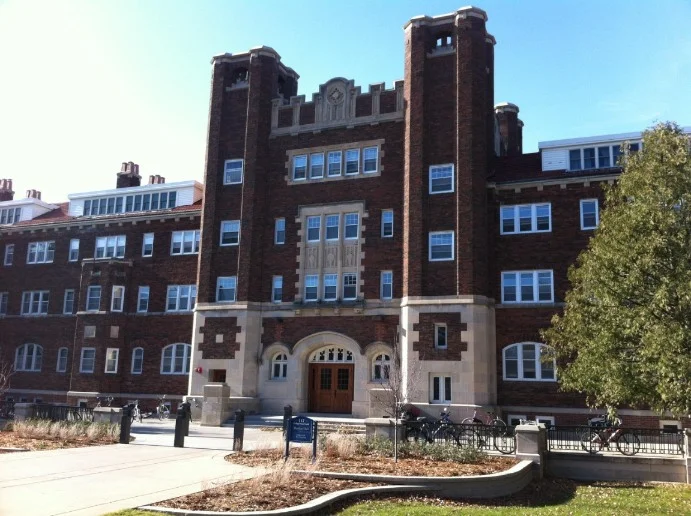
Carleton College, established in 1866, is a top liberal arts college in Minnesota known for academic rigor and quirky traditions. The college's trimester system allows intensive study across disciplines. Carleton's strengths include STEM, humanities, and off-campus study programs. The campus features the Weitz Center for Creativity and Cowling Arboretum.
Carleton's alumni include MacArthur genius grant winners and tech innovators. The college's collaborative culture and Minnesota's natural beauty inspire intellectual curiosity. Its blend of challenge and support defines the Carleton experience.
With 22.3% of applicants admitted, Carleton College is very competitive. A strong transcript alone won't guarantee a seat.

Grades open the door at Carleton College, but a strong, specific personal statement is often what closes it.
Source: IPEDS & College Scorecard (Nov 2025).
Mark November 15 for Carleton College (Early Decision I — other plans are listed below), with decisions typically out by December 15.
Deadlines are verified from official institutional sources but may change each cycle. Always confirm final dates on the official website.
The average GPA of admitted students at Carleton College is 3.9. That makes admissions here extremely selective. Most admitted students carry straight A's, with very little room for a B.
If your GPA sits between 3.60 and 3.9, a high SAT or ACT score is the most reliable way to compensate.
Note the scale: this figure reflects an unweighted 4.0 GPA. Add AP or IB coursework and the equivalent weighted GPA usually lands around 4.10–4.30.Assessment: This tier demands elite, top-of-class academic standing.
Recommended Strategy: Pair the GPA with heavy Course Rigor, including AP, IB, or Honors, to back it up.
This range is a rough map. Where you land determines what else needs to carry weight in your application.:
Data verified via IPEDS, College Scorecard (Nov 2025) and the Common Data Set (CDS). Expert Review led by Sohaib Khan and Dr. Waseem.
Built from Carleton College's own verified admissions data — adjust the sliders below
Adjust the sliders to see how every decimal point affects your outcome.
✅ Verified Data: Institutional records for 2026.
Calculated via College Portal's Human-Intelligence (HI) Methodology & Editorial Standards. Verified by Sohaib Ahmad Khan.
Scores aren't just a formality at Carleton College. Landing within or above the 2026 admitted class's middle 50% keeps you fully competitive, even where submission is optional.
Admitted students at Carleton College average a 1491 SAT (out of 1600).
Carleton College's SAT average sits comfortably in the upper range nationally.
Scored under 1430? A retake is worth it at Carleton College. Two or three sittings is standard for competitive applicants, and there's no cap on how many times you can test.
| Section | Average | 25th Percentile | 75th Percentile |
|---|---|---|---|
| SAT Math | 755 | 720 | 790 |
| SAT Reading | 735 | 710 | 760 |
| SAT Composite | 1491 | 1430 | 1550 |
A score under 1430 puts you in the lower quarter of admits; 1550+ puts you ahead of three-quarters of the admitted class. (These percentiles mark where a given share of the admitted class scored at or below.)
View list of all colleges with average SAT score of 1500
At 1550, your SAT is squarely in Carleton College's favor. That said, admissions staff read the full file. GPA, activities, and essays still carry real weight even with a strong score in hand.
Carleton College's admitted students average an ACT of 33.
Carleton College's ACT average sits comfortably in the upper range nationally.
| Section | Average | 25th Percentile | 75th Percentile |
|---|---|---|---|
| ACT Math | 32 | 29 | 34 |
| ACT English | 34 | 33 | 35 |
| ACT Composite | 33 | 32 | 34 |
At 34, you're in the top quarter of Carleton College's admitted class by ACT score. That's a real advantage, but admissions still reads GPA, essays, and activities alongside it.
The ACT's four sections, English, Math, Reading, and Science, are each scored independently on a 1–36 scale, and admissions staff do notice a lopsided breakdown. If one section trails the others significantly, that's worth addressing before you apply, particularly for STEM programs where Science carries extra weight.
Beyond the number itself, Carleton College weighs your transcript rigor, activities, recommendations, and essays just as heavily. The ACT opens the door, and the rest of your file decides what happens next.
Competitive positioning at Carleton College means clearing the academic bar comfortably, then using the rest of your application to show genuine fit.
Carleton College in Northfield, Minnesota is one of the most intellectually rigorous liberal arts colleges in the country, with an overall acceptance rate around 18-20% that drops meaningfully in the Regular Decision pool. Carleton offers both ED I (November 15 deadline, mid-December decisions) and ED II (January 15 deadline, mid-February decisions), and both rounds carry a statistically meaningful acceptance advantage over Regular Decision - a gap that experienced Carleton counselors consistently describe as significant. ED I is the stronger of the two rounds for highly competitive applicants. Beyond the statistical advantage, Carleton's close-knit residential community of approximately 2,000 students places genuine value on knowing that admitted students have chosen Carleton specifically and deliberately - not as a hedge or a backup. Carleton is also a QuestBridge partner institution, creating a separate and important application pathway for high-achieving low-income students whose financial circumstances make the binding ED commitment possible with confidence.
Carleton's sole supplemental essay - 300 words maximum - is deceptively focused: "Think about someone you connect with who's different from you. What do you find most meaningful about your interactions with them?" This prompt is not an accident. Carleton's admissions office has designed it to evaluate a specific quality that defines successful students in its community: the genuine ability to engage with intellectual, cultural, and personal difference without condescension, fear, or defensiveness. Carleton is known for attracting students who take ideas seriously but do not take themselves too seriously - who can hold strong convictions and still remain genuinely curious about where they might be wrong. Your essay should center a specific, real relationship with someone meaningfully different from you - in background, belief, identity, or worldview - and reflect with honest depth on what you have learned from that interaction. Admissions readers will know within two sentences whether the reflection is authentic or performed, so resist the impulse to make yourself the hero of the story.
Carleton's academic culture is built around the premise that learning is intrinsically valuable - pursued for its own sake rather than for grades, credentials, or external validation. This ethos shapes how the admissions committee reads every application component: extracurriculars, essays, recommendations, and even the activities section are all evaluated for evidence that an applicant's intellectual engagement is genuinely self-directed and internally motivated. Show that you pursue ideas when no one is requiring you to: through independent reading, personal research projects, online courses beyond what your school offers, participation in math circles or science olympiads, creative work, or civic engagement driven by genuine curiosity rather than r?sum?-building. Carleton operates on a trimester system with three intensive 10-week terms - an academic structure that rewards students who can sustain deep focus on a small number of courses at high intensity, and your extracurricular profile should signal that you can work with that kind of concentrated depth.
Carleton requires two teacher recommendations and a school counselor letter, and the committee's evaluation of these letters is genuinely substantive in a way that many applicants underestimate at smaller liberal arts colleges. Because Carleton does not conduct admissions interviews, the teacher recommendation letters are the committee's primary human-voice evidence about the kind of intellectual community member you will be - in seminar discussions, research projects, and collaborative student life. Choose teachers from your junior year in core academic subjects who have seen you engage with ideas beyond test performance: the teacher who watched you push back on a received interpretation, pursue an independent line of inquiry, bring genuine humor to a serious discussion, or demonstrate the intellectual humility to revise a position when confronted with better evidence. Brief your recommenders on Carleton's academic culture before they write, so they can frame your qualities in terms the committee will find most relevant to a collaborative, discussion-intensive liberal arts environment.
At $81,350/year against a $75,525 median graduate salary, Carleton College is worth weighing against your specific program and financial situation. The numbers below give you a real basis for that decision.
Admitted students' families report a median household income around $71,100, and graduates see a 3.23% unemployment rate.
Listed tuition runs $81,350/year at Carleton College. Factor in Pell and federal grant aid, and most students land typically much lower.
At Carleton College, 14% receive a Pell Grant and 43.4% carry federal loans. Filing FAFSA early and naming Carleton College on it improves your shot at both.
Ten years out from enrollment, Carleton College graduates report a median income of $75,525, about 86% above the U.S. median graduate income.

These schools have lower average SAT or ACT scores than Carleton College. If your SAT or ACT score is slightly lower, you'll be competitive for these schools.
| School | Location | SAT | ACT |
|---|---|---|---|
| Northeastern University Oakland | Oakland, CA | 1472 | 32 |
| Occidental College | Los Angeles, CA | 1461 | 33 |
| Scripps College | Claremont, CA | 1480 | 33 |
| Colorado College | Colorado Springs, CO | 1445 | 33 |
| Georgia Institute of Technology-Main Campus | Atlanta, GA | 1447 | 31 |
| Tulane University of Louisiana | New Orleans, LA | 1443 | 32 |
| Bates College | Lewiston, ME | 1446 | 32 |
| University of Maryland-College Park | College Park, MD | 1463 | 34 |
| Boston University | Boston, MA | 1473 | 33 |
| Brandeis University | Waltham, MA | 1473 | 33 |

These schools have the same range of average SAT or ACT scores as Carleton College. If your SAT or ACT score is competitive, you'll be competitive for these schools also.
| School | Location | SAT | ACT |
|---|---|---|---|
| University of Southern California | Los Angeles, CA | 1501 | 34 |
| Georgetown University | Washington, DC | 1494 | 33 |
| Grinnell College | Grinnell, IA | 1486 | 33 |
| Colby College | Waterville, ME | 1500 | 33 |
| Amherst College | Amherst, MA | 1494 | 33 |

These schools have higher average SAT or ACT scores than Carleton College. If you improve your SAT or ACT score, you'll be competitive for these schools.
| School | Location | SAT | ACT |
|---|---|---|---|
| Harvey Mudd College | Claremont, CA | 1537 | 35 |
| Yale University | New Haven, CT | 1534 | 34 |
| University of Chicago | Chicago, IL | 1554 | 35 |
| Northwestern University | Evanston, IL | 1526 | 34 |
| Johns Hopkins University | Baltimore, MD | 1553 | 35 |
Carleton College graduates earn a moderate median salary of $75,525/year, with some variation by field.
Tuition at Carleton College runs high, at roughly $81,350+/year, so financial aid planning matters.
14.0% receive a Pell Grant here, below the ~35% national average. Carleton College skews toward higher-income students, though merit aid may still be worth checking.
Carleton College's acceptance rate is 22.3%, comparatively higher than most selective universities. Admission is more attainable here.
The average GPA of admitted Carleton College students is 3.9, reflecting a competitive applicant pool.
There's no strict cutoff, but a GPA at or above 3.6 puts you in the standard applicant pool at Carleton College. Below that, your essays and recommendations need to work harder to provide context.
A GPA of 3.5 or below makes admission tougher at Carleton College, but strong test scores, activities, and essays, plus AP/IB coursework, can still keep you in contention.
Carleton College weighs the SAT heavily. Scoring above 1491, and within the 1430–1550 range, keeps you competitive.
Carleton College's deadline is November 15 (Early Decision I), with decisions out by December 15.
Transferring in is a well-trodden path here. Line up your transcripts, recommendations, and a strong personal statement before applying.
The biggest levers are academic performance, a clear extracurricular focus, and essays that stand out, plus a solid test score where the school considers one.