
Non-Profit Private
Accredited · Higher Learning Commission
Tulsa, Oklahoma
58% Acceptance Rate
A complete at-a-glance picture of every metric that matters for your 2026 application
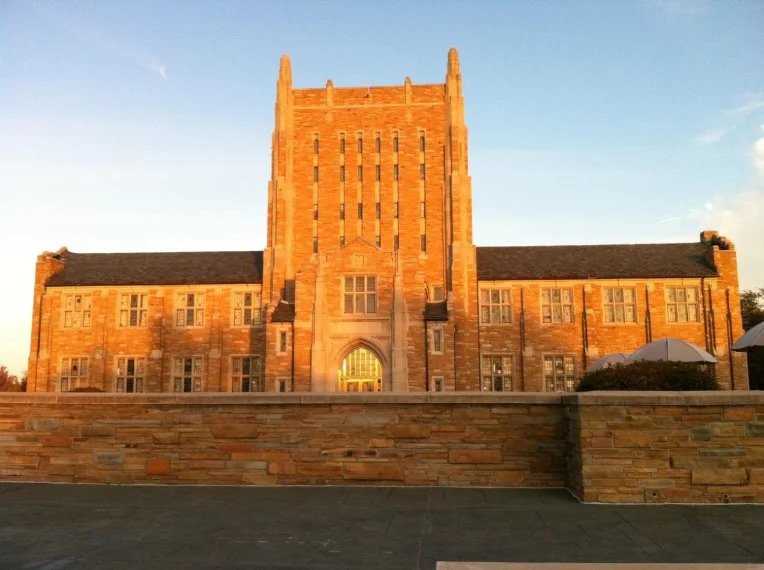
The University of Tulsa, founded in 1894, is a private research university ranked among the top national universities by U.S. News. TU offers 60+ undergraduate programs across five colleges, with particular strengths in engineering, computer science, and energy law. The university's 200-acre campus features the Gilcrease Museum partnership, the Stephenson Hall for engineering, and the newly renovated McFarlin Library. TU is classified as a 'Doctoral University: High Research Activity' with strong industry ties in the energy sector.
TU's location in Oklahoma's second-largest city provides internship opportunities with major energy companies and tech firms. The Golden Hurricane compete in NCAA Division I athletics in the American Athletic Conference. The university's National Energy Policy Institute and Cyber Corps program address critical national needs. TU's small class sizes (11:1 student-to-faculty ratio) and comprehensive financial aid make private education accessible.
University of Tulsa is moderately selective. 58% of applicants are admitted, with room for a well-rounded, if imperfect, transcript.

Source: IPEDS & College Scorecard (Nov 2025).
Mark November 1 for University of Tulsa (Early Action — other plans are listed below), with decisions typically out by December 15.
💡 The scholarship deadline (December 1, 2026) often falls before the regular admission deadline. Submit your application and FAFSA early to be considered for maximum aid.
Deadlines are verified from official institutional sources but may change each cycle. Always confirm final dates on the official website.
The average GPA of admitted students at Tulsa University is 3.97. That makes admissions here extremely selective. Most admitted students carry straight A's, with very little room for a B.
If your GPA sits between 3.67 and 3.97, a high SAT or ACT score is the most reliable way to compensate.
Note the scale: this figure reflects an unweighted 4.0 GPA. Add AP or IB coursework and the equivalent weighted GPA usually lands around 4.17–4.37.Assessment: This tier demands elite, top-of-class academic standing.
Recommended Strategy: Pair the GPA with heavy Course Rigor, including AP, IB, or Honors, to back it up.
This range is a rough map. Where you land determines what else needs to carry weight in your application.:
Data verified via IPEDS, College Scorecard (Nov 2025) and the Common Data Set (CDS). Expert Review led by Sohaib Khan and Dr. Waseem.
Built from University of Tulsa's own verified admissions data — adjust the sliders below
Adjust the sliders to see how every decimal point affects your outcome.
✅ Verified Data: Institutional records for 2026.
Calculated via College Portal's Human-Intelligence (HI) Methodology & Editorial Standards. Verified by Sohaib Ahmad Khan.
Scores aren't just a formality at Tulsa University. Landing within or above the 2026 admitted class's middle 50% keeps you fully competitive, even where submission is optional.
Admitted students at University of Tulsa average a 1325 SAT (out of 1600).

A 1325 average is a respectable, above-average benchmark nationally.
Scored under 1150? A retake is worth it at Tulsa University. Two or three sittings is standard for competitive applicants, and there's no cap on how many times you can test.
| Section | Average | 25th Percentile | 75th Percentile |
|---|---|---|---|
| SAT Math | 655 | 560 | 750 |
| SAT Reading | 665 | 590 | 740 |
| SAT Composite | 1325 | 1150 | 1490 |
A score under 1150 puts you in the lower quarter of admits; 1490+ puts you ahead of three-quarters of the admitted class. (These percentiles mark where a given share of the admitted class scored at or below.)
View list of all colleges with average SAT score of 1350
At 1500, your SAT is squarely in Tulsa University's favor. That said, admissions staff read the full file. GPA, activities, and essays still carry real weight even with a strong score in hand.
Tulsa University's admitted students average an ACT of 29.
An average of 29 is a respectable, above-average national benchmark.
| Section | Average | 25th Percentile | 75th Percentile |
|---|---|---|---|
| ACT Math | 28 | 24 | 31 |
| ACT English | 30 | 24 | 35 |
| ACT Composite | 29 | 24 | 33 |
At 33, you're in the top quarter of Tulsa University's admitted class by ACT score. That's a real advantage, but admissions still reads GPA, essays, and activities alongside it.
The ACT's four sections, English, Math, Reading, and Science, are each scored independently on a 1–36 scale, and admissions staff do notice a lopsided breakdown. If one section trails the others significantly, that's worth addressing before you apply, particularly for STEM programs where Science carries extra weight.
Beyond the number itself, Tulsa University weighs your transcript rigor, activities, recommendations, and essays just as heavily. The ACT opens the door, and the rest of your file decides what happens next.
Tulsa University takes a broad view of applicants. Your energy is best spent proving readiness for coursework and maximizing your financial aid package.
TU lists five supplemental essays as optional, but admissions explicitly recommends answering them to be taken seriously. Treat them as required in practice, especially the "Why UTulsa" (200 words) and "How do you see yourself contributing to TU?" (200 words) prompts.
For the "contributing to TU" prompt, reference a real, specific program: True Blue Neighbors (community partnerships rooted in the Kendall-Whittier neighborhood) or GreenTU sustainability initiatives. Vague "I'll get involved on campus" answers read as generic.
The National Merit Semifinalist Full-Ride Package requires a "Talk with Tulsa" interview with an admission counselor as a hard requirement, not an optional extra. Schedule it early since it directly gates a full-ride scholarship.
The 250-word extracurricular/work-experience prompt rewards depth on one activity over a list of many. Pick your most substantive commitment and explain the "why," not just the "what."
Students often submit TU's application with the essays left blank because they're marked optional, not realizing admissions reads this as a lack of interest. Skipping all five essays is a real, common way strong applicants underperform their stats here.
Whether Tulsa University is worth it depends less on its reputation and more on your program choice, financial aid package, and career goals. Here's the data to weigh it against.
Admitted students' families report a median household income around $62,900, and graduates see a 2.91% unemployment rate.
Listed tuition runs $63,093/year at Tulsa University. Factor in Pell and federal grant aid, and most students land typically much lower.
At Tulsa University, 26.1% receive a Pell Grant and 36.6% carry federal loans. Filing FAFSA early and naming Tulsa University on it improves your shot at both.
Ten years out from enrollment, Tulsa University graduates report a median income of $61,408, about 51% above the U.S. median graduate income.

These schools have lower average SAT or ACT scores than University of Tulsa. If your SAT or ACT score is slightly lower, you'll be competitive for these schools.
| School | Location | SAT | ACT |
|---|---|---|---|
| The University of Alabama | Tuscaloosa, AL | 1287 | 28 |
| University of the Pacific | Stockton, CA | 1303 | 27 |
| Point Loma Nazarene University | San Diego, CA | 1278 | 26 |
| University of San Francisco | San Francisco, CA | 1313 | 29 |
| Thomas Aquinas College | Santa Paula, CA | 1277 | 29 |
| United States Coast Guard Academy | New London, CT | 1290 | 28 |
| University of Delaware | Newark, DE | 1297 | 29 |
| University of Central Florida | Orlando, FL | 1277 | 27 |
| Rollins College | Winter Park, FL | 1304 | 29 |
| Agnes Scott College | Decatur, GA | 1296 | 29 |

These schools have the same range of average SAT or ACT scores as University of Tulsa. If your SAT or ACT score is competitive, you'll be competitive for these schools also.
| School | Location | SAT | ACT |
|---|---|---|---|
| University of Alabama in Huntsville | Huntsville, AL | 1321 | 28 |
| Auburn University | Auburn, AL | 1318 | 28 |
| Fairfield University | Fairfield, CT | 1323 | 31 |
| Florida State University | Tallahassee, FL | 1323 | 29 |
| Simmons University | Boston, MA | 1332 | 29 |

These schools have higher average SAT or ACT scores than University of Tulsa. If you improve your SAT or ACT score, you'll be competitive for these schools.
| School | Location | SAT | ACT |
|---|---|---|---|
| Pepperdine University | Malibu, CA | 1367 | 29 |
| Westmont College | Santa Barbara, CA | 1367 | 32 |
| Colorado School of Mines | Golden, CO | 1403 | 31 |
| United States Air Force Academy | USAF Academy, CO | 1362 | 30 |
| Trinity College | Hartford, CT | 1396 | 32 |
University of Tulsa graduates earn a moderate median salary of $61,408/year, with some variation by field.
Tuition at University of Tulsa runs high, at roughly $63,093+/year, so financial aid planning matters.
26.1% of University of Tulsa students get a Pell Grant. Your odds depend mostly on household income, and filing FAFSA early still helps maximize what you're offered.
University of Tulsa's acceptance rate is 58%, comparatively higher than most selective universities. Admission is more attainable here.
The average GPA of admitted University of Tulsa students is 3.97, reflecting a competitive applicant pool.
There's no strict cutoff, but a GPA at or above 3.67 puts you in the standard applicant pool at University of Tulsa. Below that, your essays and recommendations need to work harder to provide context.
A GPA of 3.57 or below makes admission tougher at University of Tulsa, but strong test scores, activities, and essays, plus AP/IB coursework, can still keep you in contention.
University of Tulsa weighs the SAT heavily. Scoring above 1325, and within the 1150–1490 range, keeps you competitive.
University of Tulsa's deadline is November 1 (Early Action), with decisions out by December 15.
For priority financial aid consideration, get your FAFSA in before December 1, 2026. That's University of Tulsa's scholarship priority date.
Transferring in is a well-trodden path here. Line up your transcripts, recommendations, and a strong personal statement before applying.
The biggest levers are academic performance, a clear extracurricular focus, and essays that stand out, plus a solid test score where the school considers one.