
Public
Accredited · Middle States Commission on Higher Education
Middletown, Pennsylvania
96.4% Acceptance Rate
A complete at-a-glance picture of every metric that matters for your 2026 application
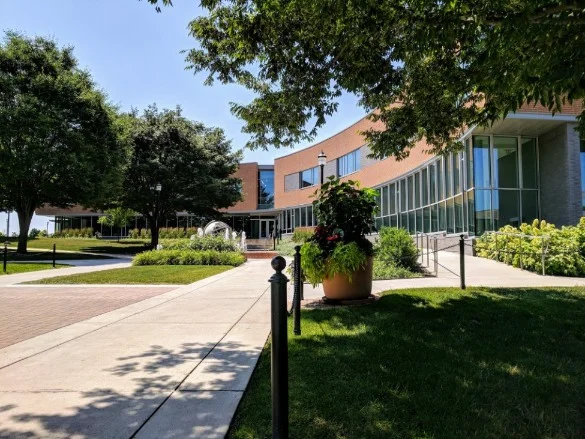
Penn State Harrisburg, founded in 1966, is a comprehensive residential college of Penn State University located on 218 acres near Pennsylvania's state capital. Harrisburg offers 35+ bachelor's degrees that can be completed locally, plus graduate programs through Penn State's Graduate School. The campus features state-of-the-art facilities including the Library and the Educational Activities Building, maintaining a 15:1 student-to-faculty ratio. Harrisburg is classified as a 'Doctoral University: High Research Activity' with particular strengths in public policy and engineering.
Harrisburg's location provides internship opportunities with state government agencies and Fortune 500 companies. The campus's Center for Survey Research and Center for Holocaust and Jewish Studies conduct important scholarly work. Harrisburg's School of Public Affairs is nationally ranked, while its engineering programs benefit from partnerships with regional employers. The campus hosts cultural events including the annual Penn State Harrisburg Arts and Lecture Series.
Admission at Pennsylvania State University-Penn State Harrisburg is inclusive by design. 96.4% of applicants who meet basic eligibility are accepted.

Source: IPEDS & College Scorecard (Nov 2025).
Pennsylvania State University-Penn State Harrisburg follows a Rolling Admissions policy, meaning applications are reviewed as they arrive and there is no single fixed deadline, though the priority deadline of November 1 is recommended for the best chances of admission and financial aid.
Penn State reviews applications continuously throughout the year. Seats and scholarships are awarded on a first-come, first-served basis, so applying early gives you a significant advantage for both admission and financial aid.
💡 The scholarship deadline (November 1, 2026) often falls before the regular admission deadline. Submit your application and FAFSA early to be considered for maximum aid.
Deadlines are verified from official institutional sources but may change each cycle. Always confirm final dates on the official website.
The average GPA of admitted students at Penn State is 3.48. That makes admissions here competitive, but not extremely selective. Most admitted students carry a mix of A's and B's.
In the 3.18–3.48 range, a high SAT or ACT score still carries real weight.
Note the scale: this figure reflects an unweighted 4.0 GPA. Add AP or IB coursework and the equivalent weighted GPA usually lands around 3.68–3.88.Assessment: Selective, with solid academic performance as the expectation.
Recommended Strategy: A clear, defined strength in one activity or research area matters more than breadth.
This range is a rough map. Where you land determines what else needs to carry weight in your application.:
Data verified via IPEDS, College Scorecard (Nov 2025) and the Common Data Set (CDS). Expert Review led by Sohaib Khan and Dr. Waseem.
Built from Pennsylvania State University-Penn State Harrisburg's own verified admissions data — adjust the sliders below
Adjust the sliders to see how every decimal point affects your outcome.
✅ Verified Data: Institutional records for 2026.
Calculated via College Portal's Human-Intelligence (HI) Methodology & Editorial Standards. Verified by Sohaib Ahmad Khan.
Scores aren't just a formality at Penn State. Landing within or above the 2026 admitted class's middle 50% keeps you fully competitive, even where submission is optional.
Admitted students at Pennsylvania State University-Penn State Harrisburg average a 1218 SAT (out of 1600).

A 1218 average tracks near the middle of the national distribution.
Scored under 1110? A retake is worth it at Penn State. Two or three sittings is standard for competitive applicants, and there's no cap on how many times you can test.
| Section | Average | 25th Percentile | 75th Percentile |
|---|---|---|---|
| SAT Math | 610 | 550 | 670 |
| SAT Reading | 605 | 560 | 650 |
| SAT Composite | 1218 | 1110 | 1320 |
A score under 1110 puts you in the lower quarter of admits; 1320+ puts you ahead of three-quarters of the admitted class. (These percentiles mark where a given share of the admitted class scored at or below.)
View list of all colleges with average SAT score of 1200
At 1300, your SAT is squarely in Penn State's favor. That said, admissions staff read the full file. GPA, activities, and essays still carry real weight even with a strong score in hand.
Penn State's admitted students average an ACT of 28.

An average of 28 is a respectable, above-average national benchmark.
| Section | Average | 25th Percentile | 75th Percentile |
|---|---|---|---|
| ACT Math | 27 | 24 | 29 |
| ACT English | 28 | 24 | 31 |
| ACT Composite | 28 | 26 | 30 |
At 30, you're in the top quarter of Penn State's admitted class by ACT score. That's a real advantage, but admissions still reads GPA, essays, and activities alongside it.
The ACT's four sections, English, Math, Reading, and Science, are each scored independently on a 1–36 scale, and admissions staff do notice a lopsided breakdown. If one section trails the others significantly, that's worth addressing before you apply, particularly for STEM programs where Science carries extra weight.
Beyond the number itself, Penn State weighs your transcript rigor, activities, recommendations, and essays just as heavily. The ACT opens the door, and the rest of your file decides what happens next.
Penn State provides an open gateway to higher education. Success here is about using available resources well and planning your longer-term academic or career path.
Penn State Harrisburg's location minutes from Pennsylvania's state capital gives Criminal Justice and Public Policy students documented internship access to the State Police Academy, the governor's office, state legislature, and executive agencies (DOT, DEP, and others) - a genuinely location-specific advantage, not marketing language, since these placements are described by faculty as a defining feature of the School of Public Affairs. Referencing the specific Harrisburg Semester program (which pairs a for-credit internship with a speaker series featuring actual former Pennsylvania cabinet officials and legislators) in your application or major-specific outreach shows you've researched the program's real structural advantage over other Penn State campuses, not just its convenient location.
Penn State Harrisburg explicitly confirms that graduates receive the same Pennsylvania State University diploma as University Park graduates, with identical standing in the job market - but Harrisburg's acceptance rate (~98%) is dramatically higher than University Park's, and its Early Action deadline (November 1) matters most for maximizing your options. If your top priority is the Penn State name and degree rather than the University Park social experience specifically, applying directly to Harrisburg (rather than hoping for a 2+2 or "change campus" pathway later) is a genuinely more direct and less competitive route to the same credential.
The Harrisburg Semester program offers $2,500 stipends specifically for Penn State undergraduates completing a summer internship through this program - a named, applied-for funding source (not generic financial aid) that directly offsets the cost of housing near the Capitol (the International House charges $550-750/month) while you intern unpaid or low-paid in state government. If you're a Public Affairs-track student weighing whether you can afford a governmentinternship semester, apply for this fund specifically rather than assuming the internship itself is financially out of reach.
Harrisburg's Honors Program lists an Early Decision deadline of April 3 (decision by April 20, and required for guaranteed on-campus housing if accepted) and a Regular deadline of April 26 (decision by May 31) - materials include a personal statement and letter(s) beyond the standard first-year application. If Honors and guaranteed housing both matter to you, the April 3 Early Decision date is the one to actually build your calendar around, not the general admission rolling deadline most students default to.
Because Penn State Harrisburg's overall acceptance rate is close to 98% and the general first-year application process is described by students as straightforward, applicants sometimes assume every subsequent step - including major-specific advising and program admission - is equally frictionless. It isn't uniformly: Honors College admission runs on a separate, dated timeline with its own materials (personal statement, letter, guaranteed-housing tie-in), and getting into Penn State broadly doesn't automatically route you into competitive internship pipelines like the Harrisburg Semester - those require a proactive, separate application through the School of Public Affairs internship coordinator, not passive enrollment in a relevant major.
At $32,029/year against a $63,435 median graduate salary, Penn State is worth weighing against your specific program and financial situation. The numbers below give you a real basis for that decision.
Admitted students' families report a median household income around $63,400, and graduates see a 3.15% unemployment rate.
Listed tuition runs $32,029/year at Penn State. Factor in Pell and federal grant aid, and most students land closer to $23,478.
At Penn State, 26.1% receive a Pell Grant and 43.3% carry federal loans. Filing FAFSA early and naming Penn State on it improves your shot at both.
Ten years out from enrollment, Penn State graduates report a median income of $63,435, about 56% above the U.S. median graduate income.

These schools have lower average SAT or ACT scores than Pennsylvania State University-Penn State Harrisburg. If your SAT or ACT score is slightly lower, you'll be competitive for these schools.
| School | Location | SAT | ACT |
|---|---|---|---|
| Birmingham-Southern College | Birmingham, AL | 1197 | 24 |
| Samford University | Birmingham, AL | 1203 | 26 |
| University of Arkansas | Fayetteville, AR | 1174 | 25 |
| Harding University | Searcy, AR | 1187 | 25 |
| Dominican University of California | San Rafael, CA | 1194 | 26 |
| Eastern Connecticut State University | Willimantic, CT | 1200 | NA |
| University of Hartford | West Hartford, CT | 1207 | 29 |
| University of New Haven | West Haven, CT | 1190 | NA |
| Howard University | Washington, DC | 1205 | 25 |
| Nova Southeastern University | Fort Lauderdale, FL | 1182 | 25 |

These schools have the same range of average SAT or ACT scores as Pennsylvania State University-Penn State Harrisburg. If your SAT or ACT score is competitive, you'll be competitive for these schools also.
| School | Location | SAT | ACT |
|---|---|---|---|
| University of Mobile | Mobile, AL | 1220 | 24 |
| John Brown University | Siloam Springs, AR | 1222 | 26 |
| Ouachita Baptist University | Arkadelphia, AR | 1212 | 25 |
| California Lutheran University | Thousand Oaks, CA | 1224 | 26 |
| Quinnipiac University | Hamden, CT | 1212 | 27 |

These schools have higher average SAT or ACT scores than Pennsylvania State University-Penn State Harrisburg. If you improve your SAT or ACT score, you'll be competitive for these schools.
| School | Location | SAT | ACT |
|---|---|---|---|
| University of Alabama at Birmingham | Birmingham, AL | 1251 | 26 |
| The University of Alabama | Tuscaloosa, AL | 1287 | 28 |
| University of Arizona | Tucson, AZ | 1261 | 26 |
| Embry-Riddle Aeronautical University-Prescott | Prescott, AZ | 1256 | 27 |
| Biola University | La Mirada, CA | 1258 | 27 |
Pennsylvania State University-Penn State Harrisburg graduates earn a moderate median salary of $63,435/year, with some variation by field.
Tuition at Pennsylvania State University-Penn State Harrisburg is moderate, around $32,029/year; many students supplement with aid.
26.1% of Pennsylvania State University-Penn State Harrisburg students get a Pell Grant. Your odds depend mostly on household income, and filing FAFSA early still helps maximize what you're offered.
Pennsylvania State University-Penn State Harrisburg's acceptance rate is 96.4%, comparatively higher than most selective universities. Admission is more attainable here.
The average GPA of admitted Pennsylvania State University-Penn State Harrisburg students is 3.48, reflecting a competitive applicant pool.
There's no strict cutoff, but a GPA at or above 3.18 puts you in the standard applicant pool at Pennsylvania State University-Penn State Harrisburg. Below that, your essays and recommendations need to work harder to provide context.
A GPA of 3.08 or below makes admission tougher at Pennsylvania State University-Penn State Harrisburg, but strong test scores, activities, and essays, plus AP/IB coursework, can still keep you in contention.
Pennsylvania State University-Penn State Harrisburg weighs the SAT heavily. Scoring above 1218, and within the 1110–1320 range, keeps you competitive.
Pennsylvania State University-Penn State Harrisburg's deadline is November 1, with decisions out by December 24. Rolling Admissions applies too, so earlier is always better.
Pennsylvania State University-Penn State Harrisburg charges an application fee of 65; ask admissions about waiver eligibility if cost is a barrier.
For priority financial aid consideration, get your FAFSA in before November 1, 2026. That's Pennsylvania State University-Penn State Harrisburg's scholarship priority date.
Transferring in is a well-trodden path here. Line up your transcripts, recommendations, and a strong personal statement before applying.
The biggest levers are academic performance, a clear extracurricular focus, and essays that stand out, plus a solid test score where the school considers one.